I’ve always been one of those who’ve claimed that music was better back in the day. Don’t get me wrong; Nicki Minaj has some bangers, but the craft felt more pure and honest a few decades ago. I rank Frank Sinatra high on my personal list; what a voice he had, and every word coming from his mouth was filled with joy and honesty.
My favorite song from the Rat Pack leader is “My Kind of Town,” referencing the beautiful city of Chicago. The chorus leads “My kind of town; Chicago is.” It’s an educated guess that many Swedish card players would rather sing “My king of game, Chicago is.” The card game known as Chicago has been a staple in Swedish households for decades, and thanks to one of the most thriving entrepreneurs in poker, the game has now taken a significant step onto the international scene.
Chicago: The Next Big Thing
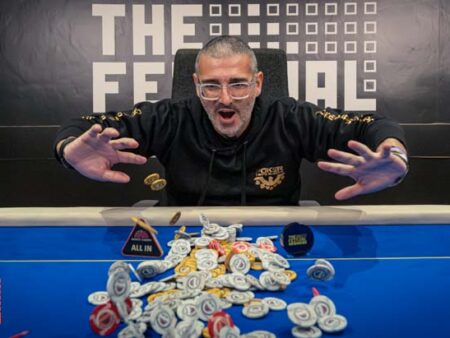
It’s been years since Martin “Franke” von Zweigbergk needed an introduction. Founder of The Festival, the Swede never runs out of ideas for new additions to his live poker events. Everything from twisting existing poker disciplines (for example, he added Sviten Special to H.O.R.S.E. to create H.O.R.S.E.S.) to delivering the best opportunities for all players to qualify for his events, the Franke brain is an eternity machine, and one has to start questioning whether his days have more than 24 hours.
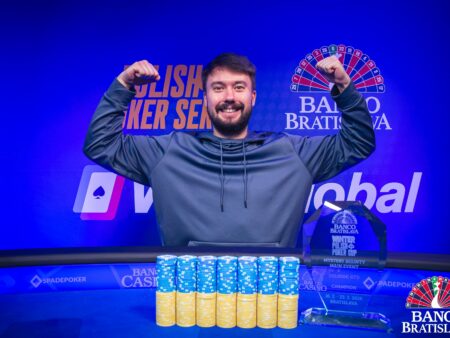
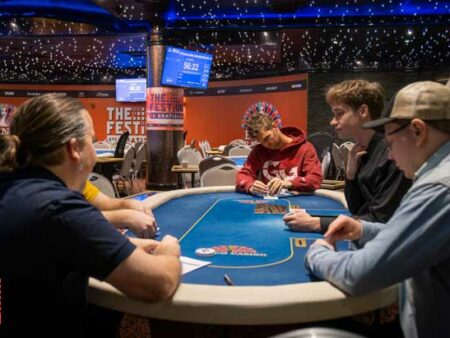
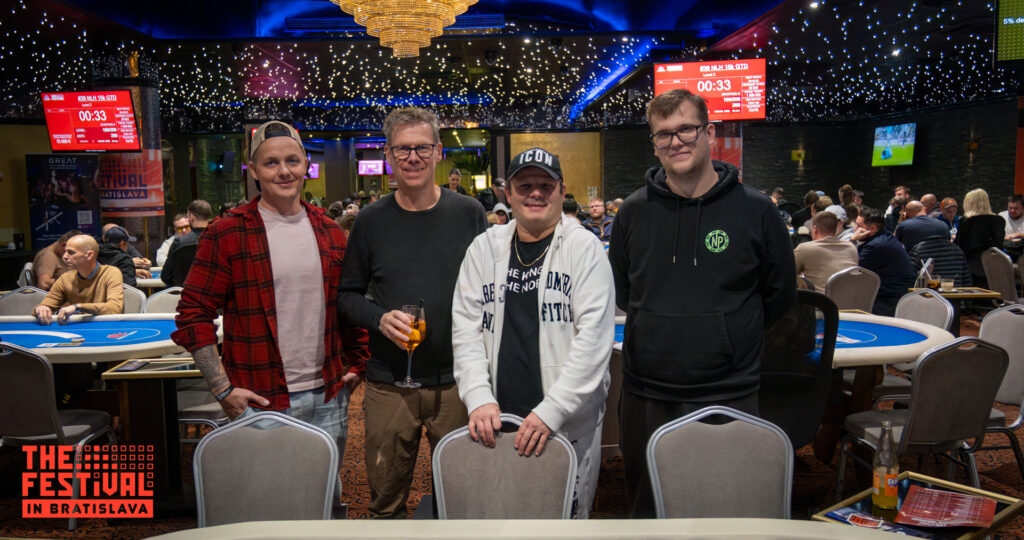
Between November 18-24, the 2025 Festival Bratislava was in full swing at the excellent Banco Casino, Bratislava. The schedule featured familiar events, such as the €500 Main Event and the €250 Hendon Mob Championship, as well as a variety of Mixed Games. There was, however, a brand-new tournament on the Bratislava menu: the €125 Chicago European Championship.
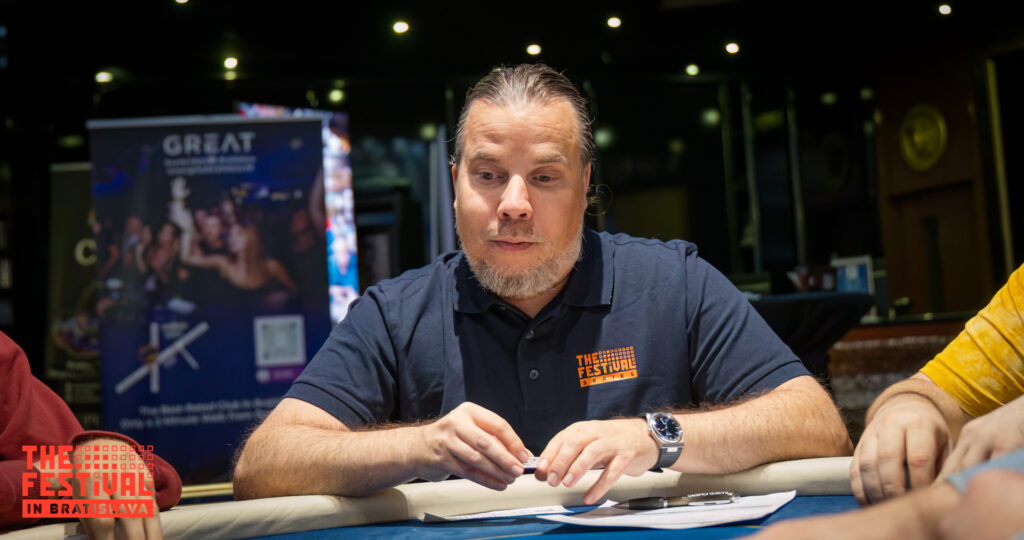
As far as this Swede is concerned, the only time Chicago has been played in a regulated tournament format prior to the 2025 Festival Bratislava is during the Swedish Championships. Arranged by the Swedish Poker Federation, national Chicago champions have been crowned ever since 2016 (except for 2020, when the Swedish Championships were cancelled due to COVID-19). There could be some Chicago tournaments I’m not familiar with, but one thing’s for sure: the 2025 Festival Bratislava hosted the first-ever European Championship of the game.
Not familiar with the Chicago rules? Don’t worry; my own explanation of the rules can be read further down in this article, in the “How to Play Chicago” section.
The tournament offered eight different starting flights; the winner of every “heat” from the various Day 1 flights moved on to Day 2.
Overall, the tournament drew 114 entries, yielding a €11,913 prize pool. As I am somewhat involved in the Swedish poker community and quite familiar with many of the players, I quickly became aware that many Vikings wanted to claim the Championship title. Apparently, the Chicago tournament was the sole reason some players traveled to the Slovakian capital. That being said, more than 50% of the total field were non-Swedish, which proves that Franke has done a great job spreading the game.
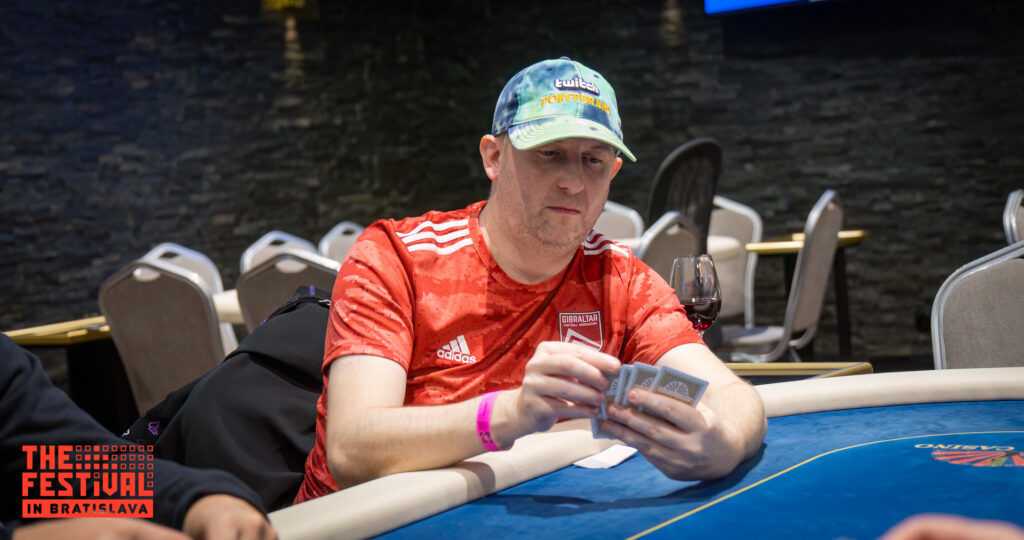
Day 2 started at 11:00 on Saturday, November 22. There were 29 players still in the mix, and eight would make the money, guaranteed a minimum cash prize of €600. Thirteen of these 29 waved the Swedish flag, one of them being Christopher Andersson (who is the reigning Swedish Chicago champion). Presumably, any of the Swedes had more Chicago hours in their own backbone than the rest of the field had combined.
One after one, though, the Swedes were knocked out during Day 2. Eventually, Geir Boine was eliminated in ninth place, and the remaining eight players were in the money. There were four Swedes left, one of them being Franke himself. Play went on, and soon enough, the first-ever final table of the Chicago European Championship was set. One Swede, one Finn, and two Norwegians were about to lock horns and compete for the very prestigious title.
“It’s disgusting,” Jörgen Bergström replied to Václav “Lemon” Dušek when asked how it felt to be the last Swede standing amongst the final four. “But fun,” he added; he was obviously just throwing some banter and joking with his opponents, who all claimed that the Swede was the clear favorite. Bergström grew up playing Chicago and had a lifetime of experience, while the competition was not as familiar with the discipline. Verneri Häkkinen, the Finn, thanked Lady Luck for helping him reach the final table; it was his first-ever time playing Chicago, and he found the best strategy was to “Just get good cards”.
The two Norwegians, Morten Antonsen and John Boine, were also more inexperienced Chicago players, but in their pre-final interview with “Lemon”, they mentioned something interesting. A few weeks prior to the Bratislava event, they were sitting at home in Norway and saw the promotional reel of Chicago posted on The Festival’s Instagram. It reminded them of an old card game they used to play in Norway, and they began practicing Chicago before their trip to Slovakia. Now, I’m willing to bet my hat on that if Franke could’ve chosen what effect would come from the championship, it would be that the game would spread to new crowds. To hear that this became reality even before the event kicked off is amazing; Franke and his The Festival crew should all be very proud of the good work they are doing.
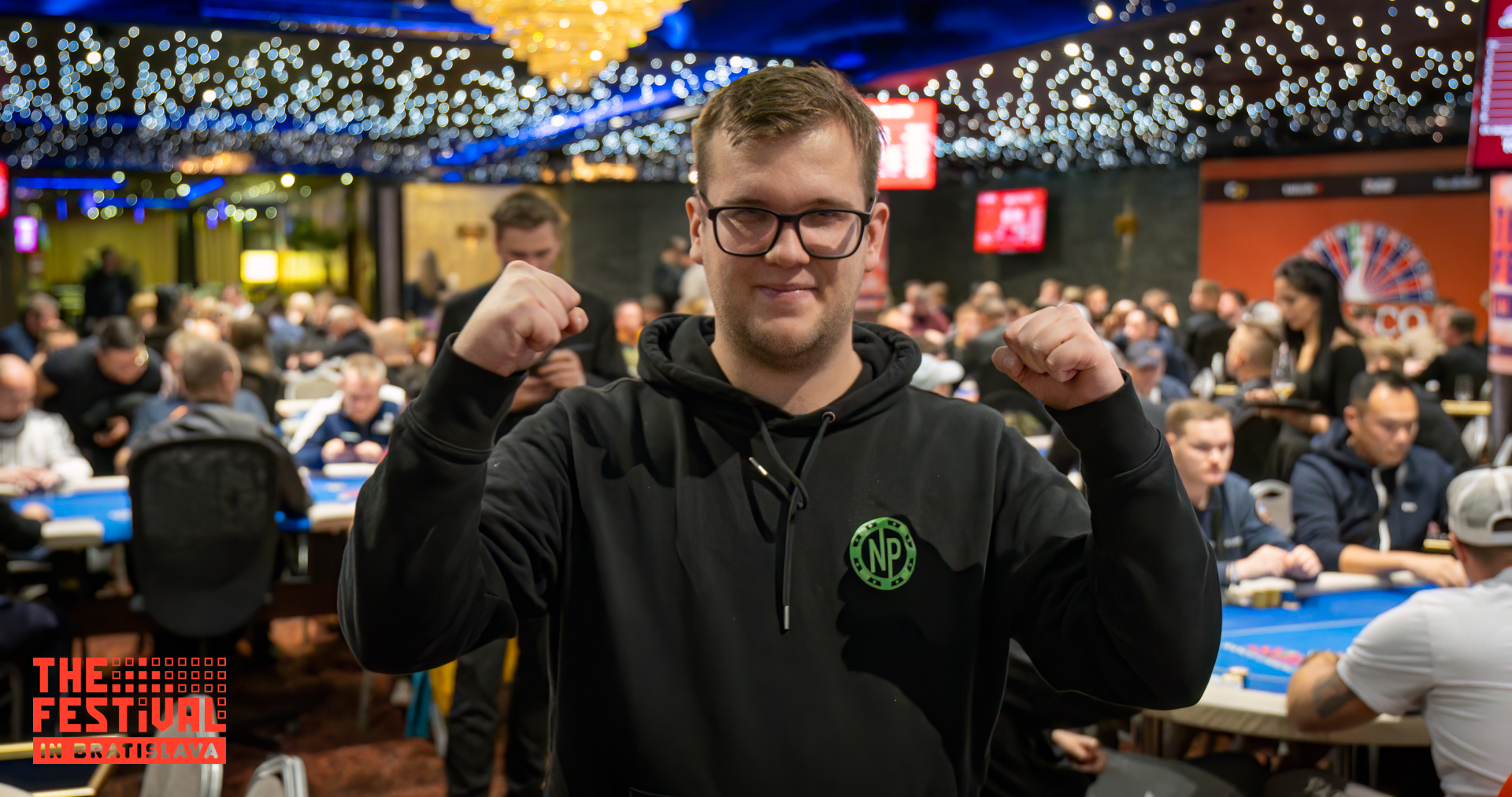
After the dust had settled, Finland’s Häkkinen was declared the first-ever European Champion of Chicago. The €3,513 first-place payout pales in comparison to the prestigious title, and perhaps, he’ll be the one who’ll start the Finnish Chicago wave and spread the game all the way from Virmajärvi to Kolttapahta. “I got a straight flush and overall good cards,” Häkkinen said in his winner’s interview, continuing his claim that luck was a crucial factor to the win. “Get better” was the advice he decided to send along to the Swedes, who, as a nation, are devastated to miss out on the inaugural title. “I say like Arnold Schwarzenegger; I’ll be back,” Bergström responded, sending a strengthening message to Sweden to lock themselves up in the red cabins by the lakes and initiate various Chicago boot camps.
€125 Chicago European Championship – Results
| Place | Player | Country | Prize |
|---|---|---|---|
| 1 |  Verneri Hakkinen Verneri Hakkinen | Finland | €3,513 |
| 2 |  Morten Antonsen Morten Antonsen | Norway | €2,400 |
| 3 | John Boie | Norway | €1,800 |
| 4 |  Per Bergström Per Bergström | Sweden | €1,200 |
| 5 | “Bambi” | N/A | €900 |
| 6 | Johan Sundström | Sweden | €900 |
| 7 | Niclas Fagerberg | Sweden | €600 |
| 8 | Martin “Franke” von Zweigbergk | Sweden | €600 |
All things considered, maybe a new nickname for The Festival Founder should be “Franke Sinatra”? His kind of game, Chicago is. Roughly one week after the event was done and dusted, I asked Franke if the Chicago Championship was successful, and if we’ll see it return next year:
“The event was insane; it was the best thing I have ever experienced, and I have arranged many tournaments in my life. A few months ago, basically no one in Europe knew what the event was. We started to market the event: we translated the rules from Swedish to English, I traveled to Hungary and Norway and hosted events there, I got the game established in various clubs, I talked to many Finnish players and so on…”
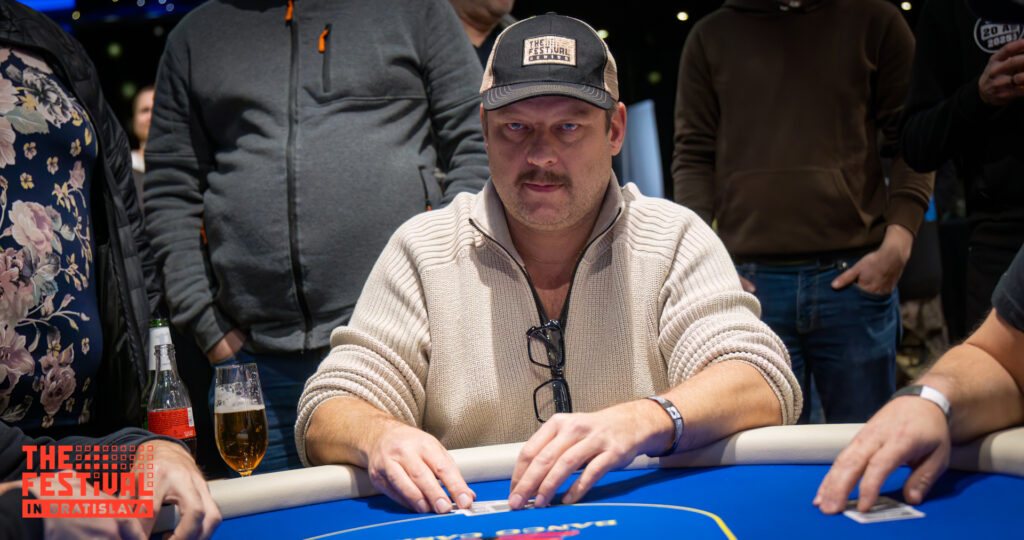
There’s no doubt that Franke did a stellar job promoting the event. That being said, how did it all turn out?
“When we (The Festival crew) arrived in Bratislava, the players swarmed. “My friends said I need to play this tournament” and “We’ve held Chicago lessons in Norway” were two amazing things to hear. One of the Hungarians who won a ticket to the Championship had played Chicago every night with his grandparents. It was amazing.”
Those who are familiar with The Festival brand are well aware that it’s so much more than only poker; in fact, the hospitality part is a crucial part of the event. I remember Lemon’s Olympic Games during the 2025 Festival Bratislava, something that was very appreciated by all visitors. Of course, Chicago had to be integrated in the Bratislava hospitality package, and as such, the crew held Chicago lessons for 40 beginners.
Franke ends our talk with the exact words I wanted to hear:
“Chicago as an event might come again, then standalone. Then, of course, we’ll have another European Chicago Championship next year. The 2026 edition will be played either in Tallinn or Malta, and the goal then is to reach 250 entries; shouldn’t be hard to do.”
Qualify for The Festival on Champion Poker
Want to secure your spot to any of the four The Festival events in 2026? If so, Champion Poker is the place for you. €5 qualifiers are running daily, and through these, players can win tickets for the €50 qualifiers that are played each Wednesday. Every Wednesday, there’s a €1,600 package guaranteed, which can be used for any The Festival event in 2026. The four major stops – Tallinn, Rozvadov, Malta, and Bratislava – have already been announced; make sure to check out the dates on The Festival’s web page, and good luck package hunting over at Champion Poker.
How to Play Chicago
Chicago is a very popular card game in Sweden, and even those of my friends who don’t know what a “Big Blind” is all know how to play Chicago. That being said, the game may not be as common around the average kitchen tables in other countries. As such, it feels like a good idea to give a rundown of the rules.
I’ve been playing Chicago for years, and with each new crowd, the rules always seem to vary; sometimes slightly, sometimes more vast. However, the Swedish Poker Federation has established its official rules for the game, and those are the ones that were applied at the 2025 Festival Bratislava.
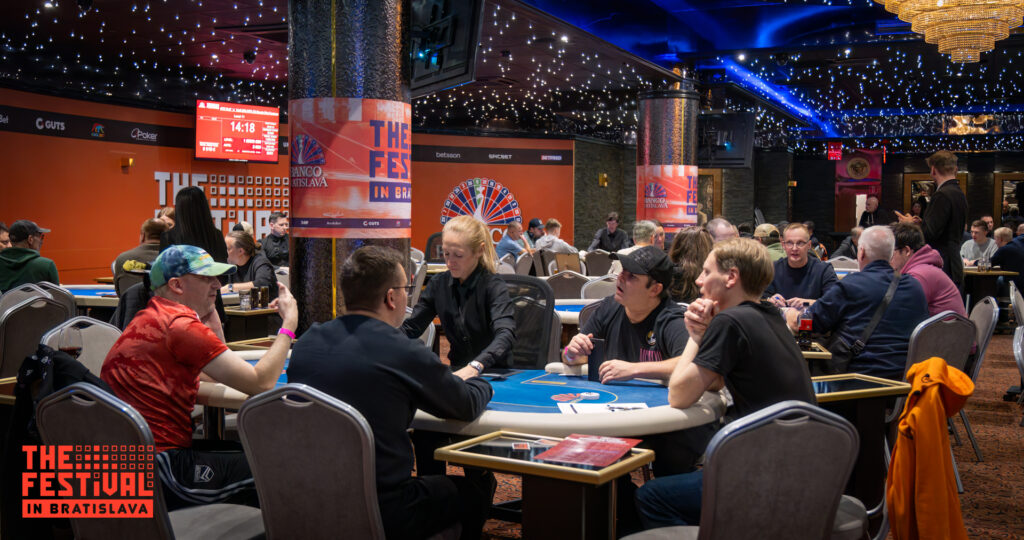
The game is played with a maximum of four players and a minimum of three. A dealer button is placed in front of a player to symbolize him/her being the dealer, and after each round, the button moves to the next player to the left, and so on, just like your regular Texas NLH game. Each player is dealt five cards each, one card at a time (again, just like any regular poker game). The goal of the game is to get as good a five-card poker hand as possible. The standard hand ranking applies (displayed below, also showing how many points each hand will earn a player in the game):
| Hand | Points |
|---|---|
| Royal Straight Flush | Automatic win with 52 points, and all other players’ existing scores will be reduced to zero |
| Straight Flush | Automatic win with 52 points |
| Four-of-a-Kind | 8 (or reduce all other players’ existing scores to zero) |
| Full House | 6 |
| Flush | 5 |
| Straight | 4 |
| Three-of-a-Kind | 3 |
| Two-pair | 2 |
| One pair | 1 |
When all players have received their initial five-card hand, they can choose to discard and draw between one and five cards to improve their hand. For example, if I’m dealt A♠A♥J♣7♦2♣, I may choose to discard J♣7♦2♣, and the dealer will then give me three new cards. When discarding cards, each player must put them in front of themselves, so the dealer can clearly see how many new cards each player desires. The player to the left of the dealer is the first one to discard, and the first one to get new cards.
After the first round of drawing, the player to the left of the dealer must declare the strength of their hand. For example, if I’m at the dealer’s direct left, I will say “I have a pair” if that’s the case. The next player will then either say, “I can’t beat that, “I too have a pair,” or “I have better than one pair; I have X” (where “X” would be two pair or better). The player who has the best hand will be awarded points based on the strength of their hand. The honor system applies; a player must not lie about the strength of their hand. Doing so may result in a penalty, or in the worst case, disqualification without getting one’s buy-in back. Other players at the table are allowed to ask a player to keep their discarded cards next to the muck; if they suspect a player is lying about their hand’s strength, they can find out after the hand is finished (which, again, would result in a penalty for the sinner).
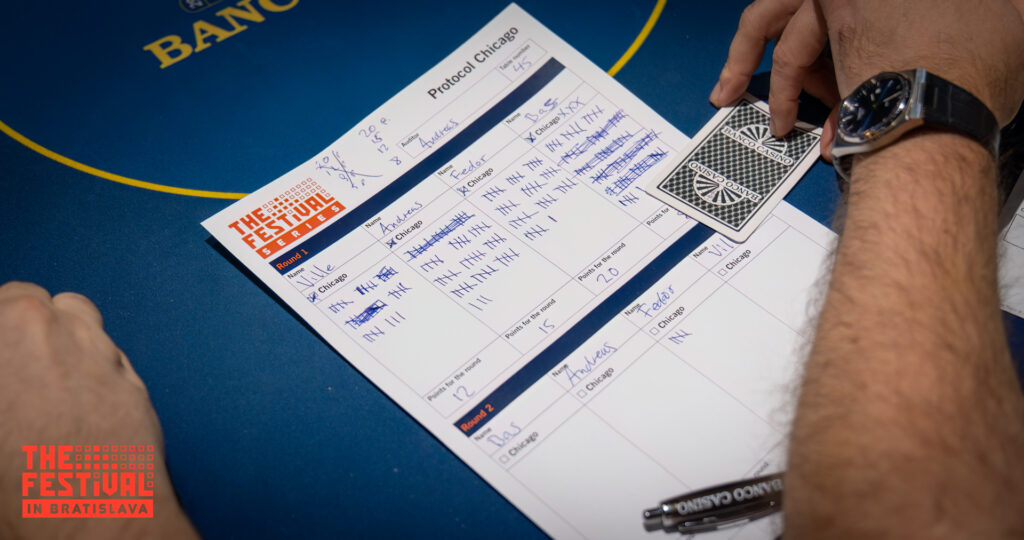
After this round, players may discard for a second time. Let’s say, hypothetically, that I was awarded points for my pair of aces. If I had decided to “break my pair” and throw away one of the aces along with J♣7♦2♣ (even though that would have been a bad move), I must let the other players at the table know that I broke my pair. Just as before, a player would have the jurisdiction to ask me to keep my discarded cards outside of the muck if they want me to prove after the hand that I, in fact, did have a pair initially.
Now, the players will once again declare the strength of their hands, just like they did after the first round of drawing. Points will be distributed, and then, players can discard for a third and final time. After the third draw, all players’ hands are now final. Now starts what is referred to as the tricking phase.
The player to the left of the dealer is the one who starts the tricking phase. He/she can play any card he/she pleases, by laying it face-up in front of them. The next player must follow suit; for example, if the initial player played the 7♥, all remaining players must play a heart if they have any. If they don’t have any heart, they can play any card of their liking. The one who plays the highest card of the current suit wins that trick phase. Considering each players have five cards, you may have already figured out that there will be five trick phases in total. Now, pay attention; the player who wins the fifth and final trick phase will receive five points. This is one of the most crucial ways to score points in Chicago.
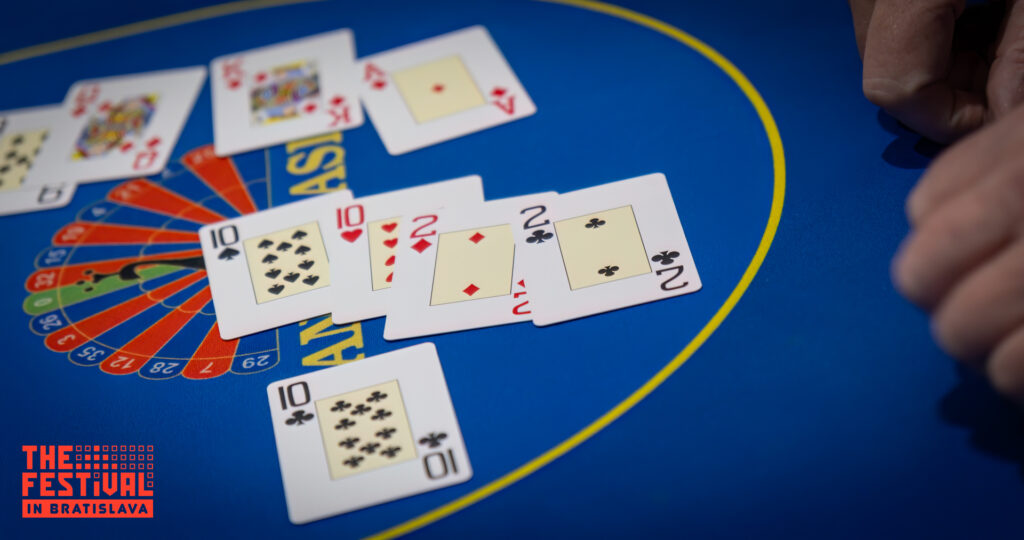
When the fifth and final trick phase is complete, all players should have revealed their five-card holdings. Let’s recap what’s happened so far in terms of point distribution: the player who had the best poker hand after the first draw received points correlating to that specific hand’s strength, and the same after the second draw. The player who won the fifth and final trick phase also received points for their feat. Now, the one who holds the best five-card poker hand will also receive points for that hand. Only the player with the best hand will receive points; in the worst case, you won’t get anything with your A♥2♥3♥4♥5♥ straight flush if I hold the superior 2♠3♠4♠5♠6♠. Tough luck!
A game of Chicago with these rules is played first to 52 points. There are a few additional rules, though.
When a player has 15 points or more, that player is entitled to say “Chicago”. A player must say Chicago at least once in order to be able to win the round. The dealer will ask all entitled players (i.e., those who have 15 points or more), “Chicago?” or similar, after the final discard/draw phase, starting with the first entitled player to the left. When a player responds “Yes”, that specific player will commence the first trick phase – even if he/she is not to the direct left of the dealer. When you’ve said Chicago, the goal is to win all five trick phases. The player will receive 15 points if he/she complete his/her Chicago. If he/she fails, he/she gets minus 15, and the player who broke his/her Chicago will earn 10 points. When Chicago is declared, no points for winning the fifth and final trick of having the best five-card poker hand will be distributed; only +15 or -15/+10 points will be given out.
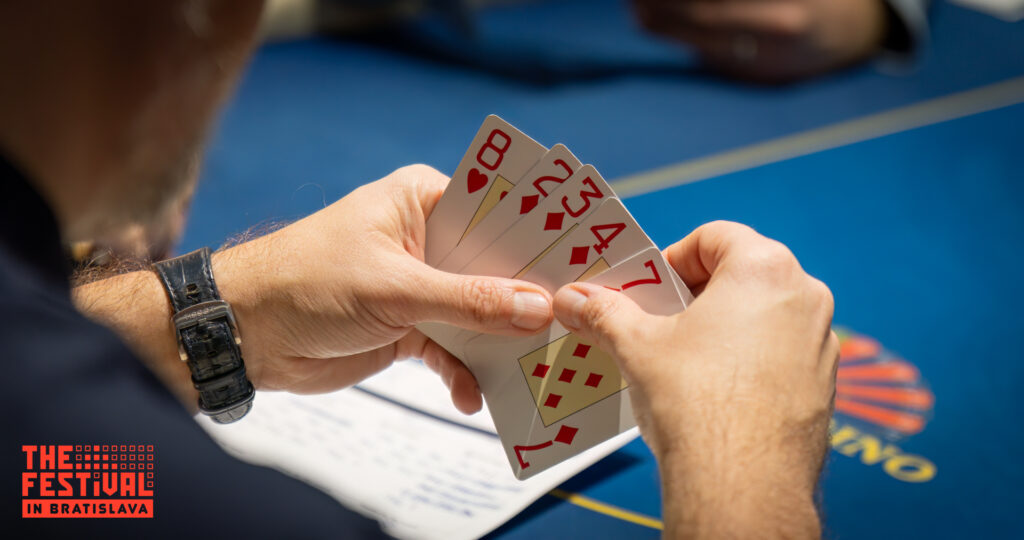
The second special twist is one that Sviten Special players will recognize: if a player chooses to draw only one card, that card will be displayed face-up. The player can either say “I’ll take that one”, which would mean that every other player would be aware that the player has that specific card in their arsenal, or say “I don’t fancy that one” and then get another one face down that no other player would see.
Last but not least: when a player has 45 points or more, that player can no longer discard cards. They must rely on their initial dealt hand to bring them home.
Example Hand
I understand that Chicago may sound like a handful when reading an explanation like this one. In an attempt to make it more graspable, let me paint a hypothetical hand. Keep in mind that after each round of drawing, the player with the best hand will get points. A breakdown of the score will be shown at the bottom.
Player B (UTG): J♠8♠9♥2♦K♥
Player C (UTG+1): 10♠9♠8♣7♠4♥
Player D (UTG+2): 4♣K♠3♠4♦6♦
Player A (BTN): Q♣J♣6♣10♦7♥
First round of discard:
Player B (UTG): Discards four cards (J♠8♠9♥2♦; drawing for other high cards to align with his King).
Player C (UTG+1): Discards one card (4♥; hoping to hit his straight).
Player D (UTG+2): Discards three cards (K♠3♠6♦, hoping to improve his pair of fours to trips).
Player A (BTN): Discards two cards (10♦7♥; ambitiously hoping to hit his flush).
New hands:
Player B (UTG): K♥A♣10♣4♥3♦
Player C (UTG+1): 10♠9♠8♣7♠5♣; since Player C only drew one card, he was first offered the A♦ face-up, but didn’t take it. He was then given the 5♣ face-down for only him to see.
Player D (UTG+2): 4♣4♦2♥5♦J♥
Player A (BTN): Q♣J♣6♣A♠8♥
Player B (UTG) is the first one to reveal the strength of his hand. The conversation may be something like this:
Player B: “I don’t have a pair.”
Player C: “Neither do I have a pair.”
Player D: “I have a pair.”
Player A: “I can’t beat that.”
Player D is awarded one point for his pair, and it’s time for the second round of discard/draw.
Player B: Discards three cards (10♣4♠3♦, drawing for high cards to go along with his Ace and his King).
Player C: Discards one card (5♣, drawing to hit his straight).
Player D: Discards three cards (2♥5♦J♥, drawing to improve his pairs of fours).
Player A: Discards two cards (A♠8♥, drawing to hit his flush).
New hands:
Player B (UTG): K♥A♣2♠10♥K♦
Player C (UTG+1): 10♠9♠8♣7♠3♣. Since Player C only drew one card, he was first offered the 2♣ face-up, but didn’t take it. He was then given the 3♣ face-down for only him to see.
Player D (UTG+2): 4♣4♦9♣7♣9♦
Player A (BTN): Q♣J♣6♣5♥Q♥
Player B (UTG) is the first one to reveal the strength of his hand. The conversation may be something like this:
Player B: “I have a pair.”
Player C: “I can’t beat that.”
Player D: “I have two pairs.”
Player A: “I can’t beat that.”
Player D is awarded two points for his two pairs, and it’s time for the third round of discard/draw.
Player B: Discards two cards (2♠10♥, drawing to improve his pair of Kings to trips or two-pairs, Aces over Kings).
Player C: Discards two cards (3♣, drawing to hit his straight.
Player D: Discards one card (7♣, drawing to improve to a full house).
Player A: Discards two cards (Q♥5♥, hoping to hit his flush.
New hands:
Player B (UTG): K♥A♣K♦Q♦6♠
Player C (UTG+1): 10♠9♠8♣7♠5♠. Since Player C only drew one card, he was first offered the K♣ face-up, but didn’t take it. He was then given the 5♠ face-down for only him to see.
Player D (UTG+2): 4♣4♦9♣9♦6♥. Since Player D only drew one card, he was first offered the J♦ face-up, but didn’t take it. He was then given the 6♥ face-down for only him to see.
Player A (BTN): Q♣J♣6♣A♥Q♣
Now, it’s time for the trick phase. Player B will start; remember that a player must follow suit if possible.
First Trick Phase:
Player B plays 6♠ (leading spades).
Player C plays 10♠ (follows suit).
Player D plays 6♥ (can’t follow suit).
Player A plays Q♠ (follows suit).
Player A won the first trick phase and will start the second trick phase.
Second Trick Phase:
Player A plays Q♣ (leading clubs).
Player B plays A♣ (follows suit).
Player C plays 8♣ (follows suit).
Player D plays 4♣ (follows suit).
Player B won the second trick phase and will start the third trick phase.
Third Trick Phase:
Player B plays K♥ (leading hearts).
Player C plays 5♠ (can’t follow suit).
Player D plays 4♦ (can’t follow suit).
Player A plays A♥ (follows suit).
Player A won the third trick phase and will start the fourth trick phase.
Fourth Trick Phase:
Player A plays J♣ (leading clubs).
Player B plays Q♦ (can’t follow suit).
Player C plays 7♠ (can’t follow suit).
Player D plays 9♣ (follows suit).
Player A won the fourth trick phase and will start the fifth and final trick phase.
Fifth Trick Phase:
Player A plays 6♣ (leading clubs).
Player B plays K♦ (can’t follow suit).
Player C plays 9♠ (can’t follow suit).
Player D plays 9♦ (can’t follow suit).
Player A won the fifth and final trick phase.
| Player | Points | Breakdown |
|---|---|---|
| Player A | 5 | Got 5 points from winning the fifth and final tricking phase. |
| Player B | 0 | N/A |
| Player C | 0 | N/A |
| Player D | 5 | Got 1 point with a pair after the first drawing round, got 2 points with a two-pair after the second drawing round, got 2 points with a two-pair after the tricking phase. |