Norway is home to some of the best poker players in the world. It also has some of Europe’s most restrictive online poker laws. For years, those two facts have coexisted uncomfortably, with Norwegian players quietly finding ways around a system that was never designed to accommodate them. That may be about to change, in ways that matter less than they sound.
On Sept. 29, 2026, Norway’s Ministry of Culture and Equality launched a public consultation proposing that Norsk Tipping, the state-owned gambling monopoly, be permitted to offer online poker for the first time. The consultation closes Nov. 29, 2026. If adopted, the proposal would create Norway’s first regulated domestic online poker product. They just will not be able to play very much of it.
- Read more: EMPC 2026 Heads to Tallinn With 12 Mixed-Game Events and a Growing Legacy
- Read more: Happy Birthday, Annette_15: The Youngest Live WSOP Bracelet Winner in History Turns 38 Today


How Norway Got Here
Norway’s gambling market has operated as a state monopoly for decades. Norsk Tipping runs lotteries, sports betting, and online casino games. Norsk Rikstoto covers horse racing. International commercial operators are not licensed, and Norway introduced DNS blocking of illegal gambling websites in 2025, adding an internet-access measure to its longstanding payment-blocking regime. The list of blocked sites covers hundreds of operators, including Unibet, Betsson, Betsafe, NordicBet and Casumo.
The payment blocking goes back further. Since 2010, Norwegian banks have been required to block transactions to unlicensed gambling operators. In November 2024, regulators tightened enforcement to close third-party routing workarounds. The state’s position has never been ambiguous: the monopoly is the market.
Poker was carved out of this system almost entirely. Organized poker has been technically legal in Norway since 2014, but only under conditions that ruled out anything competitive. Private poker games are permitted under strict conditions, including a maximum of 20 players, a NOK 1,000 (~€92) per-player stake limit, and a ban on organized or professional operation. Norway also permits an annual National Poker Championship under a separate framework.
Norsk Tipping never included online poker in its product portfolio. Not because legislators forgot, but because they deliberately excluded it.
The problem with that approach is that it did not stop Norwegians from playing. The consultation materials cite an estimate of 90,000 to 150,000 Norwegian online poker players annually. Norwegian enforcement has primarily targeted operators, marketing and payment flows rather than criminally prosecuting individual players. The money flows anyway.
What Happened to the Major Operators
The first serious round of operator exits came in late 2022 and 2023, as Lotteri- og stiftelsestilsynet (Lottstift), Norway’s gambling regulator, increased pressure on offshore operators serving Norwegian players. Around 15 major operators, including Unibet, Betsson and bet365, withdrew under that pressure.
PokerStars followed on Oct. 26, 2023, citing “commercial reasons” in an announcement to its Norwegian players. The real reason was not mysterious: the regulatory environment made it untenable to stay. GGPoker and 888poker also stopped accepting Norwegian players around the same period.
The DNS block list followed in April 2025, formalizing an already hostile environment. By the time the current consultation was published, the mainstream online poker market in Norway had been essentially cleared. Norwegian players may still encounter offshore poker rooms and private club apps, although availability, verification requirements, payment methods, and legal status vary by operator. Their continued accessibility should not be confused with legality under Norwegian gambling rules. The legal framework says these players are breaking the law. The enforcement apparatus hasn’t caught up.
A Country That Produced World Champions

The irony is that Norway has produced some of the most accomplished players in poker history, almost entirely despite its domestic laws rather than because of them.
Annette Obrestad won the inaugural WSOP Europe Main Event in 2007 at 18 years old, a record that still stands. She had spent years playing online poker from Norway under a pseudonym as an underage player, grinding her bankroll from freerolls. She left Norway and built her career in London. I remember following her rise on the now-defunct PocketFives before most people knew her. At the time, the poker community knew her only as Annette_15. She was already playing at stakes that would have made most adults nervous and famously won a 180-man sit-and-go without looking at her cards, just playing her position and her opponents.
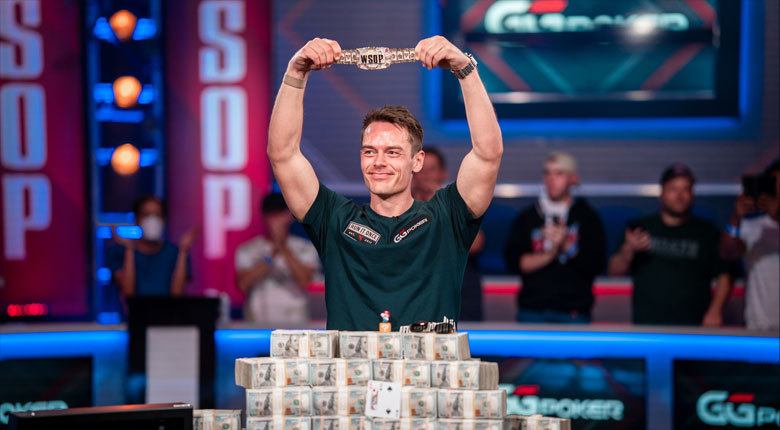
Johnny Lodden, one of the most respected high-stakes players of his generation, relocated abroad early in his career. Felix Stephensen finished runner-up in the 2014 WSOP Main Event for $5,147,739, a result that made global headlines. Espen Jørstad won the 2022 WSOP Main Event for $10,000,000 and was living in London at the time, having been public about the difficulties Norway’s laws create for anyone trying to play professionally. Speaking after his win, he described Norwegian poker laws as “quite bad.”
The live tournament scene tells the same story at a different scale. Thomas Udness organizes the Norwegian Poker Championship in Norway, working within the law’s tight constraints under different exceptions. The series has nevertheless grown substantially. The festival draws thousands of players, showing how much demand exists when organizers find creative ways to operate within the rules.
For anything larger, Norwegians go abroad. Frode Fagerli has organized the Norwegian Poker Championship in exile for years, moving it to venues where Norwegian law does not apply. The event ran in Dublin in 2022 and has continued to find international homes since. Fagerli is also a co-founder, alongside Tobias “Senkel” Leknes, of the European Mixed Poker Championship, which in 2026 heads to the Olympic Park Casino in Tallinn, Estonia, Oct. 26 to 31.
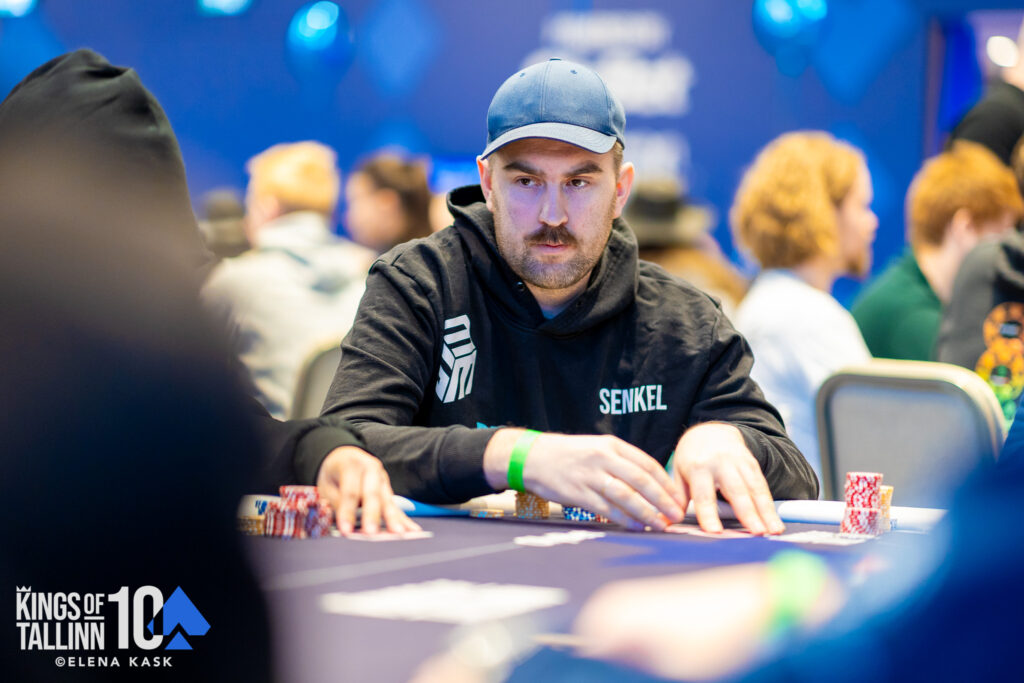
Leknes is widely regarded as one of the best mixed-game players in the world. He has accumulated a substantial record in online and live mixed-game events. That record includes 13 WCOOP titles, before PokerStars cut him off when it withdrew from the Norwegian market in 2023. He has not been able to defend or add to that record at the SCOOP or WCOOP since, not because his game declined but because the site is no longer available to him.
The EMPC exists partly in response to exactly that kind of loss. Norwegian players and organizers are building their own infrastructure because the domestic market offers none and major international platforms have been closed off. That a Norwegian-founded mixed-game festival is now a fixture on the European circuit says something about both the talent pool and the frustration behind it.
What the Consultation Proposes
Culture and Equality Minister Lubna Jaffery framed the proposal in straightforward terms: “We know that many Norwegians play online poker. Therefore, it is better that we get a responsible and safer offer here in Norway, rather than unregulated games at foreign, commercial gaming companies that are driven by profit.”
That logic is the same logic that led to the DNS blocks and payment restrictions: channeling players toward a regulated option rather than leaving them in the offshore market. The difference this time is that the regulated option would actually include poker.
If the consultation leads to a regulation change, Norsk Tipping would be permitted to offer tournament poker and cash games, with these limits.
| Restriction | Limit |
|---|---|
| Daily loss cap | NOK 5,000 (~€461) |
| Monthly loss cap | NOK 10,000 (~€922) |
| Monthly cap (under 20) | NOK 2,000 (~€184) |
| Tournament buy-in cap | NOK 2,500 (~€230) |
| Cash game buy-in cap | NOK 1,000 (~€92) |
| Cash game max big blind | NOK 10 (~€0.92) |
| Simultaneous tables | Maximum 4 |
| Tournament breaks | Mandatory 5 minutes per hour |
| Poker-to-casino switch | 15-minute mandatory pause |
The platform would close nightly between 1 a.m. and 7 a.m. Marketing restrictions are still being debated, with one option being a near-total advertising ban targeting only existing poker players.
Why This Would Not Be Enough
The stakes tell the story. A maximum big blind of €0.92 and a maximum cash buy-in of €92 describe a platform designed for casual recreational play with harm reduction as the primary goal. Those limits are not unreasonable for that purpose. They are entirely incompatible with competitive poker.
A regular NL100 player can lose a buy-in in a single hand. The proposed daily loss cap of €461 would cover fewer than five buy-ins at the maximum stakes. Players accustomed to higher-stakes international games may have little incentive to move to the proposed platform. to access real poker games will have little reason to switch. The offer is not competitive with what they can already access, even if what they are already accessing is technically illegal.
The Norwegian Poker Federation has publicly supported the regulated approach, which reflects the practical reality that some legal poker is better than none. The broader poker community’s reaction has been more muted. No international operators submitted responses to the consultation, partly because the proposal offers them nothing: it is not a licensing regime. The monopoly is preserved. No commercial operator gets a path back into Norway under this proposal.
The industry’s alternative, pushed by the European Gaming and Betting Association (EGBA) and Norway’s own industry trade body, NBO, is a multi-license model along the lines of Sweden (which opened its market in 2019) or Denmark (2012). Those markets still have significant offshore activity, but players have access to regulated competitive products. NBO has an open complaint with the EFTA Surveillance Authority challenging the payment transaction ban as incompatible with EEA rules. That complaint is the long game. The Norsk Tipping poker product, if it passes, is the short game: something, but not much.
What Happens Next
The consultation closes Nov. 29, 2026. Around 200 organizations were invited to submit responses, including addiction charities, sports bodies, consumer groups and gambling operators. Those responses will be published publicly. Norway’s Labour government, which won a second term in September 2025, has shown no appetite for a licensing model. The Norsk Tipping poker proposal is consistent with that position: more regulation of the state product, not liberalization.
If the proposal becomes law, Norway will have legal online poker for the first time. It will be a low-stakes, heavily monitored product run by a state monopoly, with tight daily and monthly spending limits, mandatory breaks, and restricted marketing. It will be available to the country that produced Obrestad, Lodden, Stephensen, and Jørstad.
Those players built their careers elsewhere. Whether this changes that trajectory in any meaningful way seems unlikely. But it would be a start, and after decades of a complete exclusion, even a start counts for something.
FAQ
- Article originally produced at poker.pro.