
The World Series of Poker (WSOP) has never been afraid to evolve, but its latest move, allowing dealers to be publicly rated, could be one of its most controversial yet.
On paper, it aligns with broader trends across hospitality and service industries where feedback loops are increasingly transparent. In practice, poker isn’t quite like ordering a ride or reviewing a restaurant. The stakes, emotions, and dynamics at the table introduce layers that make this a far more complex decision.
So is this a long-overdue accountability measure, or a risky move that could backfire?
- Read more: New WSOP Rules Has the Poker Community Confused
- Read more: 2026 WSOP: Some Games Old, Some Games New
The Case for Dealer Ratings
There’s no question that great dealers elevate the poker experience. Anyone grinding long WSOP days knows the difference between a smooth, efficient table and one that feels like it’s constantly battling friction.
Allowing players to rate dealers could bring several upsides:
- Improved accountability: Dealers who consistently perform well get recognition, while repeated issues don’t go unnoticed.
- Enhanced player experience: Faster, more professional dealing improves game flow, especially in large-field events.
- Data-driven management: WSOP staff could identify patterns, both positive and negative, rather than relying solely on floor reports.
- Recognition for top performers: Strong dealers could stand out in a system that has traditionally offered limited visibility for excellence.
In theory, this creates a merit-based ecosystem where professionalism is rewarded and inefficiencies are addressed.


The Risks and Downsides
Of course, poker tables are emotional environments. That’s where things get tricky.
- Bias and emotional ratings: Players who just took a brutal bad beat or busted a tournament are not exactly known for objective feedback, and dealers often become the easiest target in the moment.
- Misplaced blame: Dealers are regularly blamed for rulings, setups, or situations that are actually the floor’s responsibility or simply variance.
- Appearance bias: There is a real risk that factors like a dealer’s looks, demeanor, or even accent could influence ratings in ways unrelated to job performance.
- Potential for abuse: Public rating systems can attract trolling, unfair targeting, or even coordinated downvoting from disgruntled players.
- Pressure on dealers: Already working long, high-stress shifts, dealers could feel constantly judged, which may negatively impact performance rather than improve it.
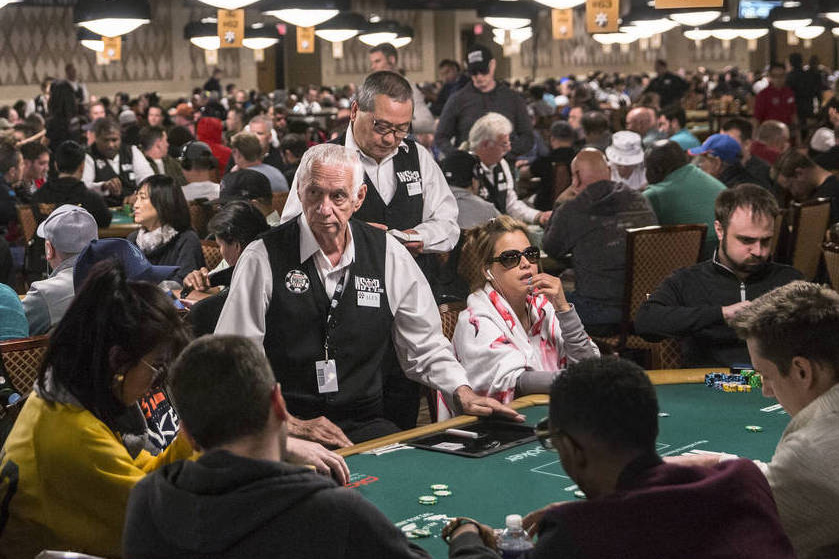
Unlike other service roles, poker dealers operate in an environment where bad beats, variance, and frustration are part of the daily routine. That makes fair evaluation far more difficult.
A Unique Industry Challenge
What makes this especially complicated is that poker dealers are part of the game’s ecosystem but not its decision-makers. They don’t control the cards, the rulings, or the outcomes, yet they often become the most visible target when things go wrong.
If the WSOP doesn’t carefully structure how these ratings are collected, filtered, and used, the system risks becoming more noise than signal. A poorly implemented system could damage morale, create unnecessary tension at the tables, and even impact dealer retention, something the WSOP can’t afford given the scale of its operations and an issue that was already sensitive in the past.
During the 2021 World Series of Poker, the series reportedly faced a significant dealer shortage as live poker returned after the pandemic. Poker rooms at some Caesars properties were temporarily closed to redirect staff to the WSOP, while players frequently reported delays, understaffed tables, and inexperienced dealers throughout the series. That experience highlighted how difficult it can be to recruit and retain enough qualified dealers for an event of the WSOP’s scale, making morale and working conditions an especially important consideration when introducing new systems like public ratings.
What Needs to Be Done Right
If this system is going to work, it can’t just be a free-for-all rating tool. Key considerations, in my opinion, should include:
- Limiting ratings to verified participants in specific events.
- Weighting feedback based on consistency rather than one-off reviews.
- Filtering out emotionally driven or abusive comments.
- Combining player feedback with internal performance metrics.
- Ensuring transparency in how ratings are actually used.
Handled correctly, this could become a valuable tool. Handled poorly, it risks becoming a distraction at best and harmful at worst.
Final Thoughts: A Gamble Within the Game
The WSOP introducing dealer ratings is, in many ways, a gamble within the game itself. There’s clear upside in promoting accountability and rewarding excellence. But there’s also real risk in exposing dealers to the emotional swings, bad beat frustration, and personal biases that define poker. As with most innovations in the poker industry, the outcome will come down to execution.
For now, it’s an interesting experiment, one that reflects a broader push toward transparency and data-driven decision-making across the industry. Whether it ultimately improves the WSOP experience or creates new challenges remains to be seen.
Time will tell.