In poker, every bet tells a story – but not every story makes sense. When players bluff, their line often leaks information through narrative inconsistency – the subtle mismatch between what they’re representing and what their actions actually say.
Even at high levels, bluffing patterns tend to follow emotional logic more than strategic logic. A player’s internal belief – “I should win this pot” – often overrides what their range or the board dictates. These moments are where strong hand readers separate themselves from the field.
Let’s break down some of the most common bluffing patterns, the “stories” they try to tell, and the flaws that expose them.
- Read more: Poker as a Game of War: How FGS (Future Game Simulation) Transforms Tournament Strategy
- Read more: The #1 Statistical Error in Cash Poker and How To Fix It
1. The Entitled AK Bluff
The pattern
A player raises preflop with A♠K♦, gets called, and sees a flop like 7♣5♦2♠. Despite completely missing, they fire a large continuation bet – then barrel again on a blank turn like the 9♥, unwilling to surrender the initiative.
The story they’re telling
“I have an overpair. I’m ahead and protecting my hand.”
Why it doesn’t add up
Strong overpairs don’t need to blast large bets on low, disconnected boards. The “entitlement effect” – the feeling that AK deserves to win – drives forced aggression. The player isn’t betting because the line makes sense; they’re betting because they can’t accept losing.
The tell
Automatic, fast-paced c-bets on dry boards that clearly miss their range. When a player doesn’t take time to size properly – especially on flops where they should slow down – it often signals frustration, not confidence.
How to respond
Call once and watch what happens on the turn. These players frequently give up by the river. If they do fire all three streets, their value story rarely adds up.
Analytical Hand Example:
Final Table: 6-handed, $25K buy-in
Blinds: 60k / 120k / 120k ante
Effective Stacks: 50 BB
Positions: Button (Hero): A♠K♦, Big Blind (Villain): 8♣7♣
Preflop: Button raises to 250k, Big Blind calls.
Pot: 620k
Flop: 7♣5♦2♠
Action: Villain checks. Hero bets 400k (≈65% pot). Villain calls. Pot: 1.42M
Analytical Breakdown:
Board texture: Extremely dry and low – better for the caller’s range (pairs, low suited connectors) than for the preflop raiser’s.
Hero’s range: Dominated by high cards and overpairs.
Villain’s observation: Hero bets large and quickly on a board that misses his range completely. Value hands such as AA or KK might continuation-bet, but typically with smaller, more deliberate sizing. A large, fast c-bet here often indicates a range bet made from entitlement rather than genuine strength.
Read: Hero’s sizing and timing suggest a routine continuation bet, not a calibrated value line. Villain calls to assess Hero’s behaviour on later streets.
Turn: 9♥
Action: Villain checks. Hero bets 1M (≈70% pot). Villain calls again. Pot: 3.42M
Analytical Breakdown:
Board change: Minimal for Hero. The 9♥ slightly connects to Villain’s defending range (97s, 98s, 76s) but does little for Hero’s likely holdings.
Hero’s line analysis: The second barrel is large and once again on an unhelpful card. If Hero held an overpair, he would likely control the pot or reduce sizing. Large, consistent aggression on a board that continues to miss his range is a range–board mismatch – one of the most reliable indicators of overconfidence or entitlement.
Villain’s inference: A-K, A-Q, or other unpaired high-card hands make up much of Hero’s range here. True value holdings (sets or 99) would often bet smaller to extract value rather than to force folds.
Read: A second large barrel without board improvement represents a weak narrative continuation. Villain calls, expecting continued high-card aggression rather than value.
River: 4♣
Action: Villain checks. Hero shoves 5.55M (full pot). Villain tanks and calls with 8♣7♣ (top pair).
Hero shows A♠K♦ (missed high cards). Pot: 14M.
Conclusion: The river shove over represents strength and fails to align with any credible value combinations. Overpairs rarely triple-barrel on such a static runout, and sets or two-pair hands would typically size smaller for value. The betting sequence demonstrates emotional persistence rather than logical range construction – the hallmark of an Entitled AK Bluff.
Villain’s call is justified by range and story analysis. The bet sizing remained consistently large across all streets. The board never improved for Hero’s perceived range. The final shove polarised a range that lacked believable value. By maintaining analytical discipline and calling based on narrative inconsistency rather than emotion, Villain correctly identifies a forced bluff on a board fundamentally incompatible with Hero’s range.

2. The Pocket Pair Protector Bluff
The pattern:
A player holds 8♠8♦ and fires into a K♦10♣3♠ flop, “betting for protection.” When the turn comes Q♥, they keep barreling, trying to “represent strength” while protecting a medium-strength hand.
The story they’re telling:
“I have a top pair-type hand and want value.”
Why it doesn’t add up:
Real top pairs don’t need protection – they want value. Medium pairs, on the other hand, should be checking or pot-controlling. Overly aggressive “protection” bets reveal discomfort more than confidence.
The tell:
Bet sizes are too large for protection but too small for genuine value. These players also avoid checking, as if afraid of showing weakness.
How to respond:
Float their early barrels, especially on dry textures where improvement is unlikely. When they face resistance on later streets, they often fold. A check-raise on the turn can exploit their fear of commitment.
Analytical Hand Example:
Final Table: 7-handed, $25K buy-in
Blinds: 60k / 120k / 120k ante
Effective Stacks: 50 BB
Positions: Cutoff (Hero): 8♠8♦, Button (Villain): K♠J♠
Preflop: Hero raises to 250k, Button calls, Blinds fold.
Pot: 620k
Flop: K♦10♣3♠
Action: Hero continuation bets 400k (≈65% pot). Villain calls. Pot: 1.42M
Analytical Breakdown:
Board texture: High and semi-connected – much better for the caller’s range, which includes Kx and Tx hands, than for Hero’s medium pocket pair.
Hero’s range: Overpairs (JJ-AA), broadway hands, and medium pocket pairs like 88–99.
Villain’s observation: Hero bets large into a flop that heavily favours the caller’s high-card range. Medium pairs typically bet smaller when “protecting” against overcards, whereas large sizing here overstates strength and reveals emotional discomfort.
Read: The bet appears motivated by fear rather than logic – a “protection” bet that doesn’t fit the board or range context. Villain calls, aware that true value would size more deliberately.
Turn: Q♥
Action: Hero bets 1M (≈70% pot). Villain calls again. Pot: 3.42M
Analytical Breakdown:
Board change: The Q♥ adds another over card, further weakening Hero’s relative hand strength while connecting strongly with Villain’s range (KQ, QJ, JT).
Hero’s line analysis: Continuing to barrel this card is inconsistent with genuine value hands. Kx and Tx would shift toward pot control, and overpairs might size smaller to extract thin value. The persistent, large aggression signals a protective mindset evolving into a bluff.
Villain’s inference: True value hands would not maintain identical sizing across streets on a worsening board. The line now lacks logical consistency – a common sign of narrative breakdown.
Read: The second large barrel confirms that Hero is not representing real strength. Villain calls, allowing the bluff to develop further.
River: 2♣
Action: Hero shoves 5.55M (full pot). Villain tanks and calls with K♠J♠ (top pair). Hero shows 8♠8♦ (medium pair turned bluff). Pot: 14M
Conclusion: The final shove with 8♠8♦ fails to represent any credible value combination.
On the board K♦10♣3♠Q♥2♣, legitimate value hands – such as KQ, KT, or sets – would size smaller for extraction, not polarise with a full-pot shove. The line demonstrates an emotional need to reclaim initiative rather than a coherent betting strategy.
Villain identifies multiple indicators of a protection-driven bluff. Board–range mismatch – each street further benefits the caller’s range, not the aggressor’s. Inconsistent story – a “protection” narrative collapses after the Q♥ turn – hands that need protection do not escalate aggression as the board worsens. Uniform sizing – similar bet sizes across all streets suggest emotional commitment, not range calibration and finally polarisation failure as the river shove implies a nut-heavy range, yet Hero holds no combinations that credibly fit that description.
By applying structured range logic and assessing bet sizing in context, Villain correctly determines that Hero’s story cannot be real. The call is not a “hero call” – it’s a logical deduction based on narrative inconsistency and range imbalance, exposing the Pocket Pair Protector Bluff.

3. The Missed Draw Autopilot Bluff
The pattern:
A player semi-bluffs the flop with a flush draw on J♣8♣2♠, gets called, then misses the 9♦ turn but keeps betting out of momentum. By the river, after bricking on a 4♥, they fire a small, hesitant bluff that doesn’t fit the pot size or their earlier story.
The story they’re telling:
“I made my draw or have a strong value hand.”
Why it doesn’t add up:
Natural value hands tend to size up as they gain confidence and build the pot. Bluffs that shrink in size across streets show fading conviction – a reverse sizing tell that signals weakness.
The tell:
Decreasing bet sizes on later streets, or a sudden tiny river bet in a spot where only polarised hands make sense.
How to respond:
Use polarisation logic. If the story says they either have a monster or nothing – and the sizing screams “nothing” – lean toward the latter.
Analytical Hand Example:
Final Table: 6-handed, $25K buy-in
Blinds: 60k / 120k / 120k ante
Effective Stacks: 55 BB
Positions: Hijack (Hero): A♣Q♣, Button (Villain): J♠J♥
Preflop: Hero raises to 250k, Button calls. Blinds fold. Pot: 620k
Flop: J♣7♣2♠
Action: Hero bets 400k (≈65% pot) with a nut-flush draw. Villain (holding top set) calls. Pot: 1.42M
Analytical Breakdown:
Board texture: Highly dynamic – multiple straight and flush draws possible.
Hero’s range: Overpairs, strong top pairs, and numerous flush and straight draws.
Villain’s observation: Hero’s large continuation bet is standard with strong value or high-equity draws. Nothing unusual at this stage. Villain calls, keeping weaker parts of Hero’s range in play.
Turn: 9♦
Action: Hero barrels 1.1M (≈75% pot). Villain calls again. Pot: 3.62M
Analytical Breakdown:
Board change: The 9♦ connects further with draws (T7, QT, T6) and adds more perceived equity to Hero’s range.
Hero’s line analysis: The large second barrel continues to represent strong draws or combo hands – consistent with semi-bluffing logic.
Villain’s inference: Hero still has many flush draws, straight draws, and combo hands, but few made value hands that improve meaningfully on this card. Sets and two pairs would often reduce sizing or balance their range by checking occasionally.
Read: Hero maintains momentum, suggesting automatic aggression rather than targeted range construction. Villain calls again, prepared to re-evaluate on the river.
River: 4♥
Action: Hero bets 900k (≈25% pot). Villain calls. Hero shows A♣Q♣ (missed nut-flush draw). Villain shows J♠J♥ (top set). Pot: 5.42M
Analytical Breakdown:
Board change: Complete brick for Hero’s perceived draws – no flushes or straights complete.
Sizing analysis: The sudden reduction in sizing from 75% pot to 25% is inconsistent with any strong value hand. True value (sets, straights, or flushes) would polarise for large value or check to induce.
Villain’s inference: The small river bet follows a classic confidence decay pattern – large flop and turn bets driven by equity, followed by a small, hesitant river bluff once the draw misses.
Read: The line lacks narrative balance. The river bet is too weak to represent a polarised hand and too unnecessary for genuine value. Villain calls, recognising a missed draw taking one final, low-risk stab.
Conclusion: This hand exemplifies the Missed Draw Autopilot Bluff, where a player barrels with real equity early, then continues automatically even when the draw fails.
Hero’s large flop and turn barrels show a “follow-through” mentality rather than situational awareness. There is sizing inconsistency – strong hands build pots across streets; missed draws often shrink bet size when confidence fades. The river 25% pot bet doesn’t align with any believable value hand. Bluffing with small sizing on a missed draw offers poor risk–reward and signals uncertainty.
By comparing street-by-street sizing, range interaction, and board evolution, Villain recognises that Hero’s line represents nothing coherent by the river. The small, perfunctory bet after two large barrels confirms a missed-draw autopilot bluff – one last attempt to “win back the pot” without a credible story. Villain’s call is an evidence-based decision rooted in bet-size progression and range logic, not guesswork – exposing the mechanical nature of the bluff.

4. The Hero Bluff That Makes No Sense
The pattern:
A player check-calls the flop, then suddenly leads the turn or river on a card that doesn’t really change the board – like turning 5♣ into a bluff lead on Q♦9♠3♣7♥.
The story they’re telling:
“I’ve improved – I just turned two pair or a straight.”
Why it doesn’t add up:
If the board didn’t materially change, what “improvement” are they representing? This line usually comes from frustration – a player tired of losing the pot decides to seize control without a credible hand to back it up.
The tell:
A sudden shift in aggression on an irrelevant turn or river card. It’s an emotional, not strategic, transition.
How to respond:
Rewind the hand in your mind. If you can name fewer than two value hands they could logically have, call lighter. Story breaks rarely come from strong hands.
Analytical Hand Example:
Final Table: 6-handed, $25K buy-in
Blinds: 60k / 120k / 120k ante
Effective Stacks: 45 BB
Positions: Cutoff (Hero): A♠J♠, Button (Villain): Q♥10♥
Preflop: Hero raises to 250k, Button calls. Blinds fold. Pot: 620k
Flop: Q♦9♠3♣
Action: Hero checks. Villain bets 350k (≈55% pot). Hero calls. Pot: 1.32M
Analytical Breakdown:
Board texture: Static and moderately connected – top pair and middle pair dominate equity.
Hero’s range: Broadways and suited aces, with some middle pairs and backdoor draws.
Villain’s observation: Hero’s check-call represents a mix of marginal made hands (9x, pocket pairs) and draws (JT, KT, A♠J♠). Nothing alarming yet.
Read: Hero’s flat call is consistent with a player holding moderate showdown value or backdoor equity, not a trap.
Turn: 7♥
Action: Hero checks again. Villain bets 900k (≈70% pot). Hero calls once more. Pot: 3.12M
Analytical Breakdown:
Board change: The 7♥ introduces potential straight draws but doesn’t drastically shift equity.
Hero’s line analysis: The second check-call maintains passivity – suggesting either a weak top pair, second pair, or a draw (e.g. A♠J♠ or JT).
Villain’s inference: Hero’s continuing range remains capped – likely one-pair hands or straight draws without improvement.
Read: No red flags; Hero’s line remains defensible up to this point.
River: 2♦
Final Board: Q♦9♠3♣7♥2♦
Action: Hero suddenly leads for 2.2M (≈70% pot), Villain tanks, calls with Q♥10♥ (top pair). Hero shows A♠J♠ (missed straight and flush draws). Pot: 7.52M
Analytical Breakdown:
Board change: The 2♦ is a complete blank – it does not complete any straight or flush that Hero could logically represent.
Line analysis: The sudden shift from two streets of check-calling to a large river lead creates a narrative discontinuity. Hands that would logically lead the river for value (sets, two pairs, straights) would have shown aggression earlier.
Sizing and timing: The large, abrupt river bet on a blank card reflects frustration more than strategic planning – a classic ‘make-it-up-as-you-go’ bluff.
Villain’s inference: There is no credible improvement from Hero’s previous check-call line. Real value hands (like Q9, 77, or 33) would not check twice before leading large on a non-threatening river. The line only makes sense if Hero is bluffing a missed draw – which fits perfectly with the missed A♠J♠.
Read: Sudden aggression on an irrelevant river card = story collapse. Villain correctly interprets the bet as an emotional, not logical, decision.
Conclusion: This is the quintessential ‘Hero Bluff That Makes No Sense’ – a player turning a missed draw into aggression on a card that changes nothing.
By comparing action sequences across streets, Villain recognises a broken story – one in which the final act (the river bet) cannot be justified by prior behaviour or board development. The blank river makes Hero’s sudden aggression implausible.
Villain calls confidently, identifying a range and narrative breakdown.
5. The Board-Oblivious Barrel
The pattern:
Some players c-bet every flop, every turn, regardless of texture or position. They never slow down – even when the board heavily favours you.
The story they’re telling:
“I’m strong everywhere.”
Why it doesn’t add up:
Real value hands adapt to texture. They check on dangerous turns, they trap on dry boards, and they vary bet sizing. Pure bluffers on autopilot, by contrast, treat c-betting as a right rather than a choice.
The tell:
Unchanging frequency and sizing across all boards. When the texture clearly hits your range – say, a paired or monotone board – and they still barrel confidently, it’s often pure air.
How to respond:
Let them keep bluffing into your advantage. If the board turns or rivers even more in your favour, trap. You can also float and apply pressure on scare cards for them.
Analytical Hand Example:
Final Table: 6-handed, $25K buy-in
Blinds: 60k / 120k / 120k ante
Effective Stacks: 55 BB
Positions: Hijack (Hero): A♦Q♠, Cutoff (Villain): 9♣8♦
Preflop: Hero raises to 250k, Villain calls. Blinds fold. Pot: 620k
Flop: 9♣6♣6♠
Action: Villain checks, Hero continuation bets 400k (≈65% pot). Villain calls. Pot: 1.42M
Analytical Breakdown:
Board texture: Paired and monotone – extremely dynamic and dangerous for the aggressor.
Hero’s range: Strong overpairs (TT+), broadways with clubs, and some air.
Villain’s observation: Hero’s large flop c-bet on a monotone, paired board is inherently risky; real value hands (flushes or full houses) often downsize or check to protect their range.
Read: Hero’s sizing shows disregard for texture – a possible sign of automatic continuation betting rather than calculated strategy. Villain calls, aware that his top pair and weak kicker likely remain ahead of Hero’s air-heavy range.
Turn: 10♣
Action: Villain checks, Hero barrels 1.1M (≈75% pot), Villain calls again. Pot: 3.62M
Analytical Breakdown:
Board change: The fourth club completes the flush.
Hero’s line analysis: Continuing to barrel heavily on a texture that now crushes the caller’s range is inconsistent with value logic. Hands containing the A♣ or K♣ would typically bet smaller to control pot size or check to induce action.
Villain’s inference: Hero’s persistent aggression on a card that massively strengthens Villain’s range – while weakening most of Hero’s – is a board awareness failure.
Read: The second large barrel into a completed flush board indicates emotional momentum or frustration, not a structured plan. Villain calls, expecting one more bluff attempt on the river.
River: 2♣ Final Board: 9♣6♣6♠10♣2♣
Action: Villain checks. Hero shoves 5.2M (full pot). Villain tanks briefly, then calls with 9♣8♦ (pair of nines with a weak flush blocker). Hero shows A♦Q♠ (no club). Pot: 13.62M
Analytical Breakdown:
Board change: The fifth club leaves virtually no value hands outside flushes and full houses.
Line analysis: Hero’s full-pot shove ignores board texture entirely. Genuine flushes or boats rarely over bet here – they would extract value with smaller sizing to ensure a call.
Sizing and narrative: Consistent, large bets across a texture that repeatedly worsens for the aggressor reveal emotional stubbornness – the essence of a Board-Oblivious Barrel.
Villain’s inference: If Hero held the A♣, betting all three streets for this sizing makes little sense; the hand would aim for value, not fold equity. Since Hero’s betting shows no awareness of the four-flush board, he almost certainly lacks a club. The only logical conclusion is that Hero is bluffing out of frustration.
Read: Continuous aggression on a board that increasingly favours the caller = severe range-texture mismatch. Villain calls, correctly identifying the bluff.
Conclusion: This hand exemplifies the Board-Oblivious Barrel – a player who continues betting automatically regardless of how the board evolves.
By recognising the board-range inversion (where the caller’s range becomes stronger than the aggressor’s) and noting the unadjusted bet pattern, Villain correctly concludes that Hero’s line cannot represent value.
Villain’s disciplined call exposes a pure bluff born of inattention.
When the Story Breaks
Across all five bluff types, one principle holds true: bad bluffs collapse under logical scrutiny.
Whether it’s the Entitled AK trying to force a win, the Pocket Pair Protector overplaying insecurity, the Missed Draw Autopilot bluffing out of momentum, the Hero Bluff acting from frustration, or the Board-Oblivious Barrel ignoring texture entirely – every failed bluff shares the same core flaw: a broken story.
Strong players don’t call because they “feel” weakness; they call because the line doesn’t add up.
Each street in a hand must fit within a coherent narrative of how real value hands behave on that texture. When an opponent’s actions – bet sizing, timing, or aggression – deviate from that logic, the mask slips. Bluffing driven by emotion rather than structure always leaves a trail.
The key to reading bluffs at a high level isn’t guessing – it’s reverse-engineering the story. Ask what real value hands would play this way, check whether sizing evolves naturally with the board, identify moments where fear or entitlement replace strategy.
Classic Bluffs and Legendary Reads Video
To see these principles in action, watch how the world’s best players dissect story logic in real time.
Top 5 INSANE READS At The Poker Table, Jonathan Little
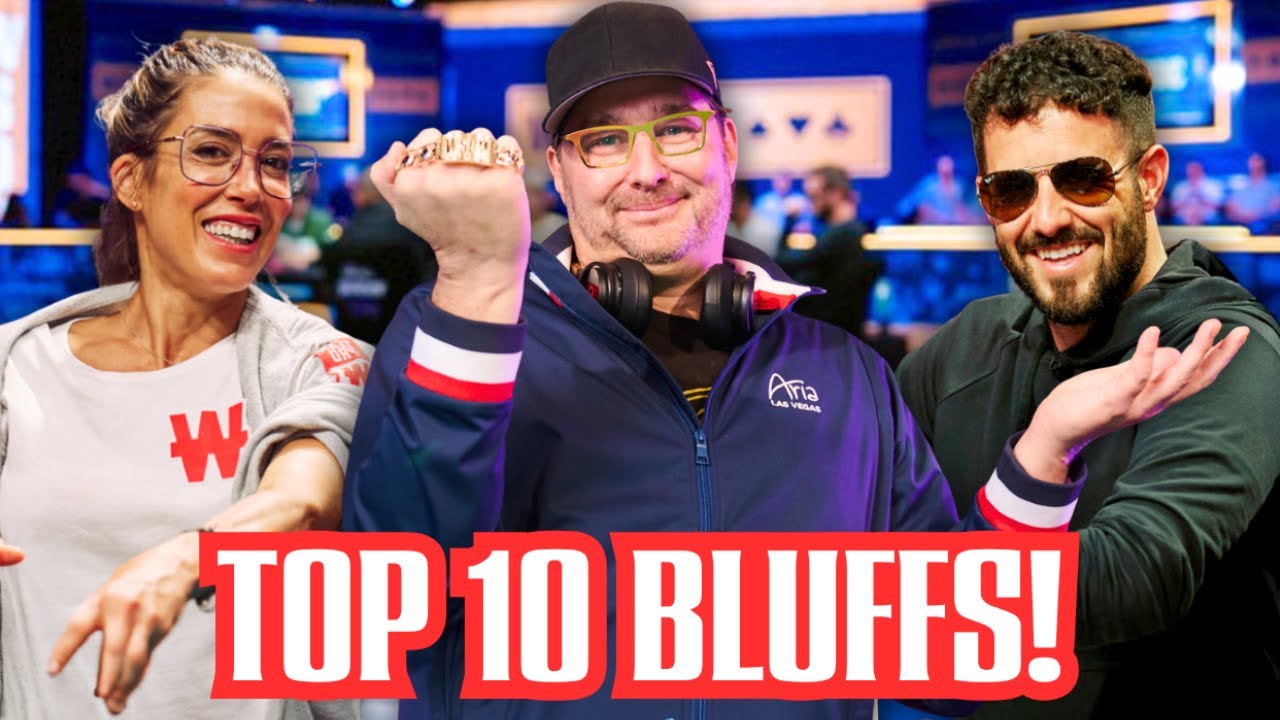
Top 10 CRAZIEST BLUFFS of the 2025 WSOP