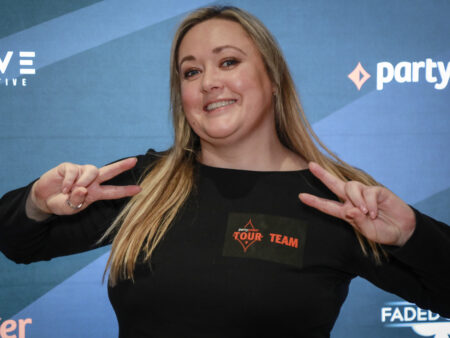
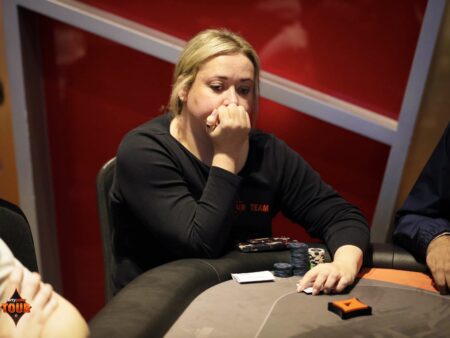
From discovering poker on Twitch to winning her first PartyPoker Tour trophy, Rebecca Hardisty has built her relationship with the game through curiosity, online satellites and a willingness to try something new. Ahead of Castellón, the PartyPoker Tour ambassador talks about the peculiar strategy of satellites, helping nervous newcomers, and why playing poker in another language is a challenge she actively looks forward to.
The day before Rebecca Hardisty won her first PartyPoker Tour trophy, she came agonizingly close. Playing a format she had never tried before in Birmingham, she reached heads-up before finishing second. For a recreational player who did not know when the opportunity might come again, the disappointment hit hard.
“I remember I was absolutely devastated,” she recalls. “I was thinking, when am I ever going to get this close again?”
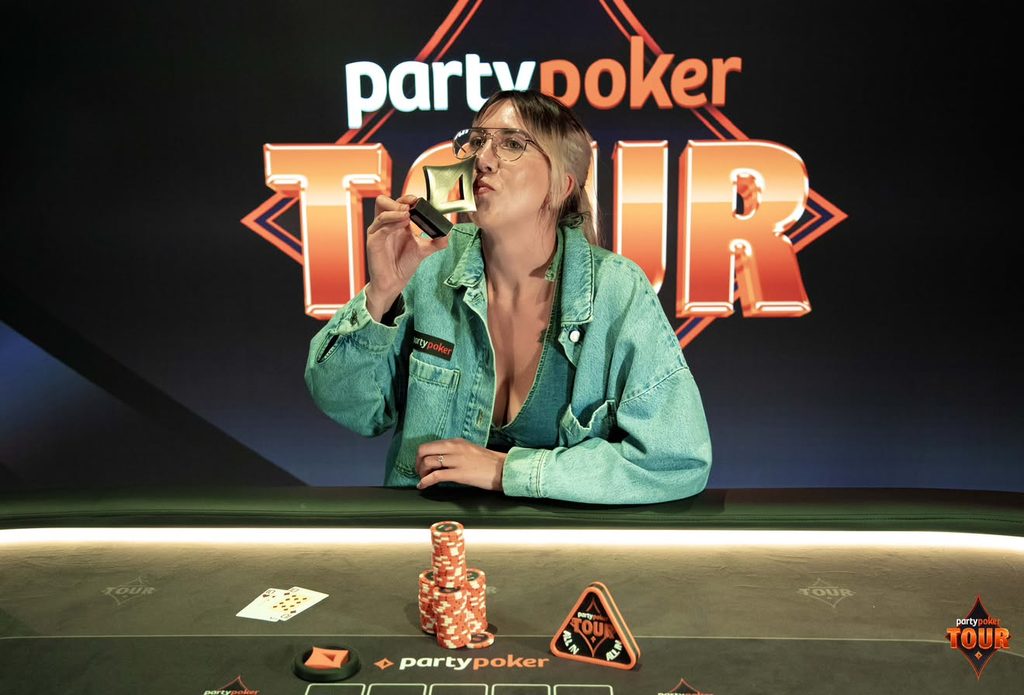
The answer, unexpectedly, was the following day. Hardisty entered another unfamiliar mixed format. Once again, she found herself at a final table. Players disappeared one by one until, for the second day in a row, she was heads-up. This time she won.
The experience captures something that runs throughout Hardisty’s approach to poker. She is curious about unfamiliar formats, comfortable admitting when she is still learning, and seemingly willing to keep putting herself into situations where she does not quite know what will happen next. That journey started not in a casino, but on Twitch.
From watching poker to playing it
Hardisty discovered poker in 2015. She was working for William Hill at the time, so gambling was already part of her professional surroundings, although her work was more closely connected to sports betting. Friends introduced her to poker, and Twitch gave her another way into the game.
She began playing online, learning the hand rankings and figuring out the basics before eventually visiting a casino with a friend to play cash. “It was super fun,” she says. The nearest casino was around 40 minutes away, however, so live poker initially remained an occasional outing rather than a regular habit. Online poker offered the more accessible route, and eventually satellites became particularly important.
The strange logic of satellite poker
For somebody accustomed to a conventional tournament, satellite poker can require an unusual change in thinking. The aim is not necessarily to accumulate every chip in play. It is to survive long enough to secure one of the available seats. That can create situations in which apparently obvious poker decisions suddenly become much less obvious.
Hardisty explains that patience becomes crucial. Players need to understand their position in relation to the remaining seats, the size of their stack, and the number of opponents still required to bust.
Sometimes, that can even mean folding a premium hand.If another player who covers you shoves while you are one elimination away from securing a seat, taking an unnecessary risk can make very little sense, even with a hand you would ordinarily be delighted to play.
“You’re getting closer and closer, and you’re getting tighter and tighter,” she explains. The question becomes whether your existing stack is enough to carry you over the line or whether you need to take one more calculated risk.
After playing so many satellites, Hardisty says these decisions have become instinctive enough that she can often manage more tables simultaneously than she would in conventional tournaments. The reward, of course, is access to live poker. And once she gets there, the game changes again.
Finding more freedom at the live table
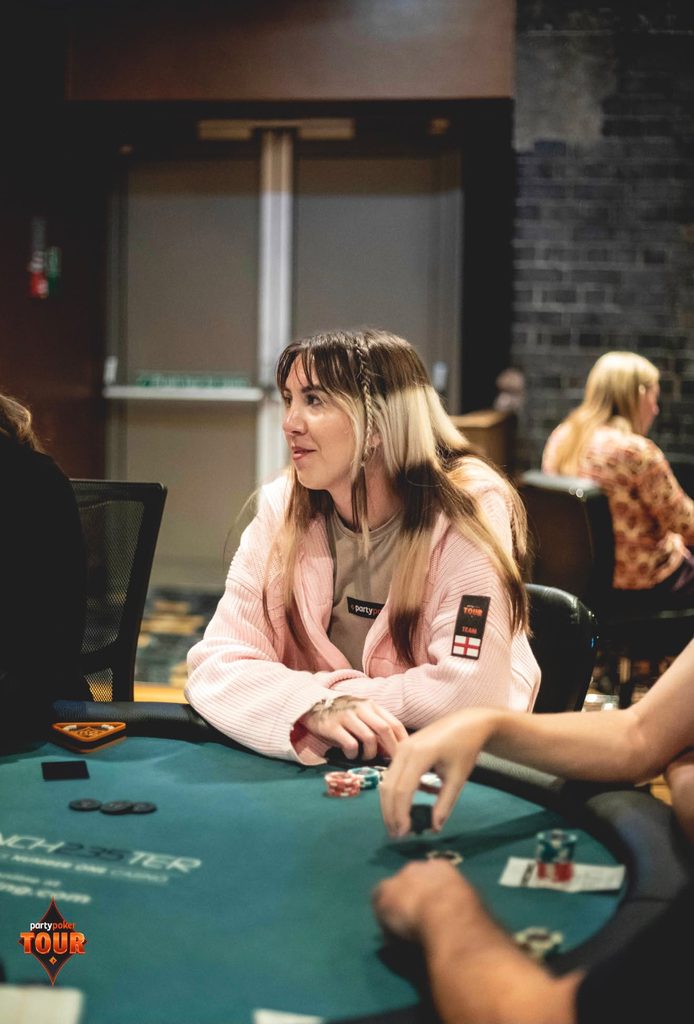
Hardisty sees live tournament poker as a chance to be more creative. A satellite demands a very particular discipline because the prize is the seat. Once she is playing the tournament she qualified for, she has more room to observe opponents, experiment, and enjoy the social side of the table.
That distinction is important because Hardisty describes herself as a “fun player”, rather than a professional. It also makes her an interesting fit for the PartyPoker Tour ambassador role. She understands the nerves of arriving at a live event because she has experienced them herself. Her solution for somebody visibly struggling at their first tournament is not to bombard them with advice. In fact, she deliberately gives them space.
Poker already requires enormous concentration, particularly for somebody trying to remember procedures, terminology, and the mechanics of live play for the first time. Trying to start a reassuring conversation in the middle of a hand can simply add another layer of pressure. Instead, Hardisty waits for a break.
That is when she might ask whether the venue is their local casino, how long they have been playing, and how they are finding the experience. Sometimes being an ambassador also means advocating for somebody at the table. If an experienced player becomes impatient with a newcomer asking questions, Hardisty is happy to remind them that the person is learning. “They’re just trying to learn,” she says. It is a small intervention, but an important part of making live poker feel accessible.
Playing without the language
That sense of being a newcomer returns when the Tour travels abroad. Hardisty remembers feeling nervous before playing in Spain for the first time. She did not speak the language and worried about entering a space in which everybody else might need to accommodate her.
It also gave her a different perspective on players who regularly attend British poker events without English as their first language. That is one of the things she is now looking forward to when the PartyPoker Tour travels to Castellón.
“I love the challenge of playing poker not in my native language,” she says.
Rather than seeing the language difference purely as an inconvenience, she regards it as another element of the game to navigate. It temporarily puts her in the position of countless international players arriving at English-language tables.
It also reinforces something she has learned through live poker: much of the game can be understood without extensive conversation. As we joked during our conversation, there is something approaching a universal language at the poker table.
Trying something you have never played before
Hardisty’s enthusiasm for unfamiliarity extends to poker formats. She is particularly fond of mixed games that take recognizable elements from more familiar forms of poker and combine them with different mechanics. Her recommendation for somebody considering their first step beyond standard Hold’em is a format blending familiar Hold’em and PLO-style elements with a discard and split-pot component. Her reasoning is simple.
It gives players enough familiarity to feel anchored while introducing something genuinely different. That willingness to experiment has already served her well. Her first near-win in Birmingham came in a format she had never previously played. Her trophy arrived the following day in another unfamiliar game. The emotional contrast between those two days has stayed with her more clearly than any particular hand.
After losing heads-up on the first day, she understood exactly what her opponent was feeling when she beat him the next. Both of them were trying to win their first trophy. Hardisty was thrilled to finally get hers, but the previous day had given her an immediate understanding of what it felt like to be the person on the other side of the result.
Poker, poker, poker
So what does life as an ambassador actually look like?
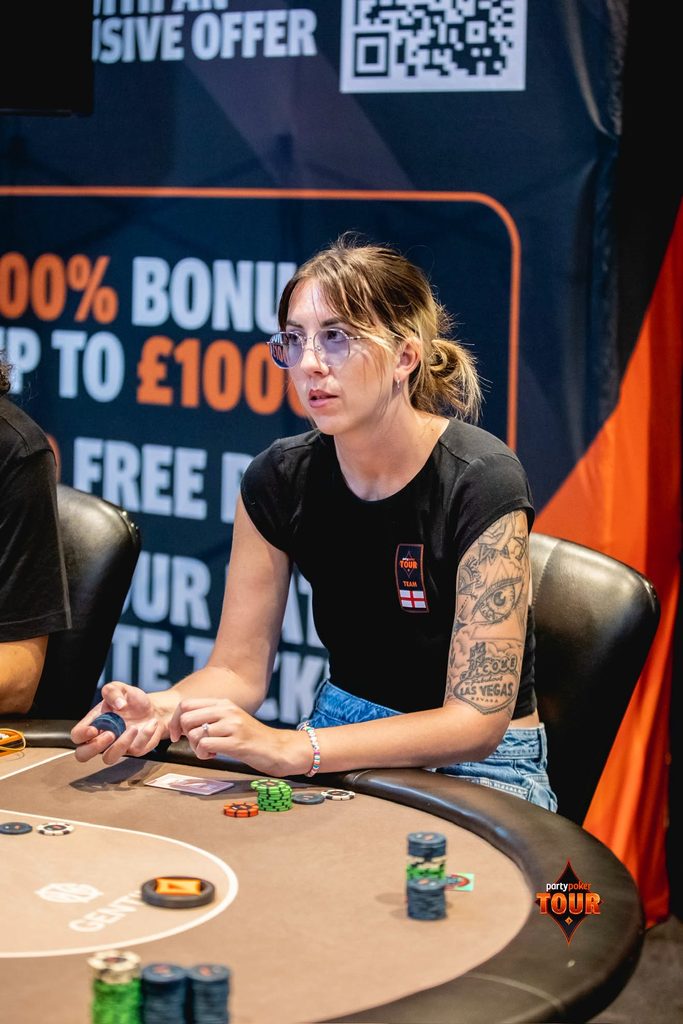
For Hardisty, it begins with coffee.“That’s my one and only rule,” she says. Once she arrives at the venue, she checks in with the welcome desk, finds out how people have been doing on the Tour’s prize wheel, and speaks to the tournament staff about how the day is progressing. Then she registers. Hardisty plays as much as possible, especially side events and unusual formats.
As one tournament ends, another may already be beginning. There is also content to make with the ambassador team, conversations with players, and the festival’s social side. Then there is more poker. “Poker, poker, poker,” is how she summarises it. Finishing time is unpredictable. Sometimes the night ends around 11 pm. Sometimes it is 3am. Occasionally it is 5 am. “It is just part of the experience.”
A tour bingo card
Hardisty has even turned her season ambitions into a game. She created a 16-square bingo card containing things she wanted to achieve over the course of the Tour. Half have already been completed.
One of the most important was bagging a Main Event for the first time. She achieved that at the Glasgow stop, where she made the money and ran to roughly 30th place. Other targets are rather less controllable. She still wants to land a 25 on the Tour wheel. There is not much strategic preparation available for that particular achievement.
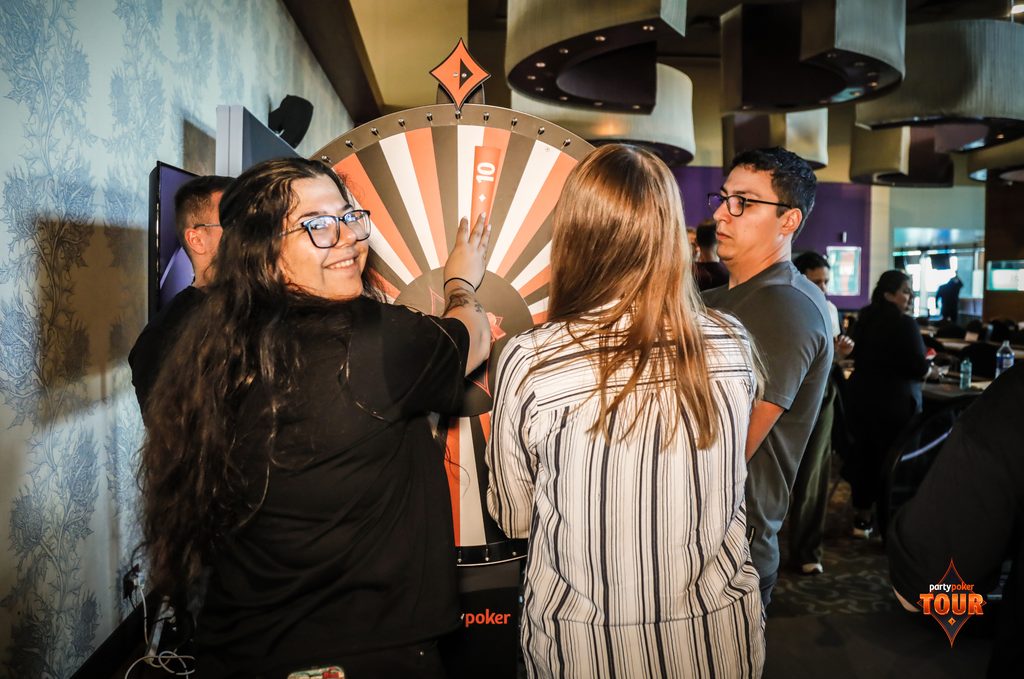
Perhaps the biggest measure of success, though, sits beyond any individual tournament result. Hardisty wants to see the Tour continue into 2027 and beyond. For somebody whose poker story has been shaped by finding new ways into the game, through Twitch, satellites, unfamiliar formats and live events, that makes sense.
The thread running through her journey is access. Satellites provide access to tournaments. Ambassadors can help new players feel that they belong once they arrive. Mixed games offer another part of poker to discover. International stops create an opportunity to enter somebody else’s culture and experience the uncertainty many traveling players navigate all the time.
Castellón will be another new location and another unfamiliar room. Hardisty is looking forward to precisely that. Sometimes being outside your comfort zone is the point.