






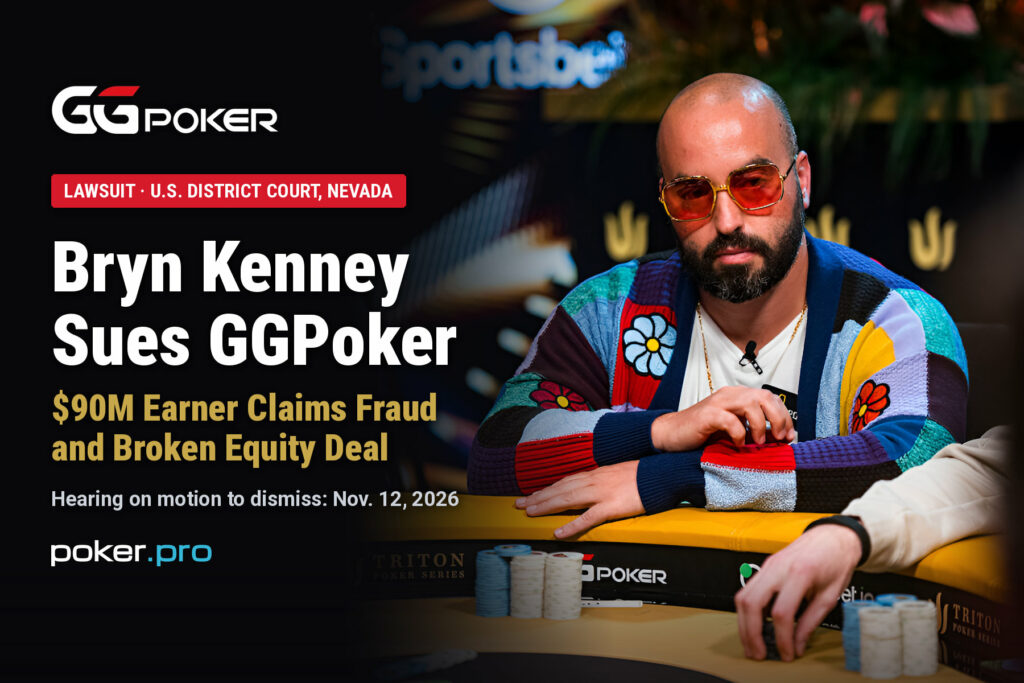
Bryn Kenney, poker’s all-time highest tournament earner, has filed suit in federal court against GGPoker’s parent company NSUS Group, its Irish affiliate NSUS Limited, and CEO Mansoo “Michael” Kim, alleging the defendants defrauded him out of a promised 5% equity stake in GGPoker and stripped him of millions of dollars in affiliate commissions he says he earned over seven years of building the platform’s high-roller ecosystem.
U.S. District Judge Jennifer A. Dorsey in Las Vegas is presiding over the case, with a hearing scheduled for November 12, 2026. The complaint alleges these claims, but they have not been proven in court.
The Alleged Deal: 2018 Oral Agreement
According to the complaint, Kenney signed a written endorsement agreement with NSUS Limited in March 2018. Later that year, Kim allegedly proposed a broader arrangement: in exchange for Kenney serving as GGPoker’s public ambassador, head of game management, and primary recruiter of high-stakes players and agents, he would receive recurring weekly payments based on revenue from the players he brought in, plus a 5% ownership stake in GGPoker. Kenney says he agreed, staking his name and personal finances on the platform.
The complaint describes the early returns as significant. By 2019, Kenney says he was generating around $5 million per year in commission income from the players and sub-agents he recruited. He claims he brought thousands of players to GGPoker and helped construct the infrastructure for the high-stakes tournaments that became a defining feature of the site’s identity. The defendants, he says, “made deliberate misrepresentations” to get him into the arrangement and then “methodically dishonored every material promise they made to him.”






How the Commissions Were Cut
The amended complaint, filed October 14, 2026, describes a pattern of changes the defendants allegedly used to reduce what Kenney was owed. He says they reclassified players he recruited, removing accounts from his affiliate tracking in GGPoker's systems. They applied what he characterizes as unauthorized deductions.
His commission rate was unilaterally cut. Critically, he says the company allegedly contacted agents in his recruitment network directly and moved them under company control, bypassing Kenney's network entirely. By the time the relationship broke down, Kenney says his annual commission income had fallen by more than $3 million compared with his first year.
He also claims that when NSUS Group acquired the World Series of Poker brand from Caesars Entertainment for $500 million in 2024, a deal he says his work helped enable, he received nothing in connection with the equity stake he had been promised six years earlier.
The $6 Million Player Payout and Out-of-Pocket Losses
One of the more striking allegations concerns a specific incident in which Kenney says Kim failed to pay $6 million in winnings owed to high-stakes players Kenney had recruited. According to the complaint, Kenney personally contributed $1 million to cover the shortfall, stepping in to protect his relationships with the players he brought to the platform.
Available court documents do not detail the circumstances, including whether the $6 million payment was ever made in full.
Cheating Allegations: Assured, Then Blamed
The complaint alleges how GGPoker handled integrity problems on its platform. Kenney says Kim assured him that GGPoker had robust anti-cheating measures in place. He then claims that systemic cheating was occurring on the platform, that Kim knew about it and failed to address it adequately, and that when the integrity issues became visible, the company publicly shifted responsibility onto Kenney and the player pools he oversaw. He alleges this was part of a broader pattern of Kim using him when it served the company and discarding him when it did not.
The complaint also alleges that GGPoker deliberately targeted U.S. players, including Nevada residents, and allowed certain users to access the platform via cryptocurrency transactions without requiring a VPN, practices that raise questions about compliance in markets where the site is not licensed.
What Kenney Is Seeking
Kenney is seeking compensatory and punitive damages totaling what the complaint describes as "tens of millions" of dollars. He is also asking the court for an accounting of corporate records, which would require NSUS to open its books on the revenue streams Kenney says he was entitled to share in. The causes of action include breach of contract and fraudulent inducement.
Kim Moves to Dismiss; Court Timeline
Kenney originally filed suit in July 2026 in Nevada's Eighth Judicial District Court in Clark County. On August 25, Kim moved the case to the U.S. District Court for the District of Nevada. On September 23, Kim filed a motion to dismiss the fraud claim against him with prejudice. In that motion, as reported by PokerNews, Kim argued that the fraud theory rests on an undated, unattributed assurance and that the complaint improperly groups him with co-defendants who are not alleged to have made any specific representations to Kenney.
Kenney filed his First Amended Complaint on October 14, 2026. The hearing on Kim's motion to dismiss is set for November 12, 2026, before Judge Dorsey. Court records list the defendant as Global Gaming and Hospitality LLC, a Nevada company, along with NSUS Group Inc. and NSUS Limited.
Who Is Bryn Kenney
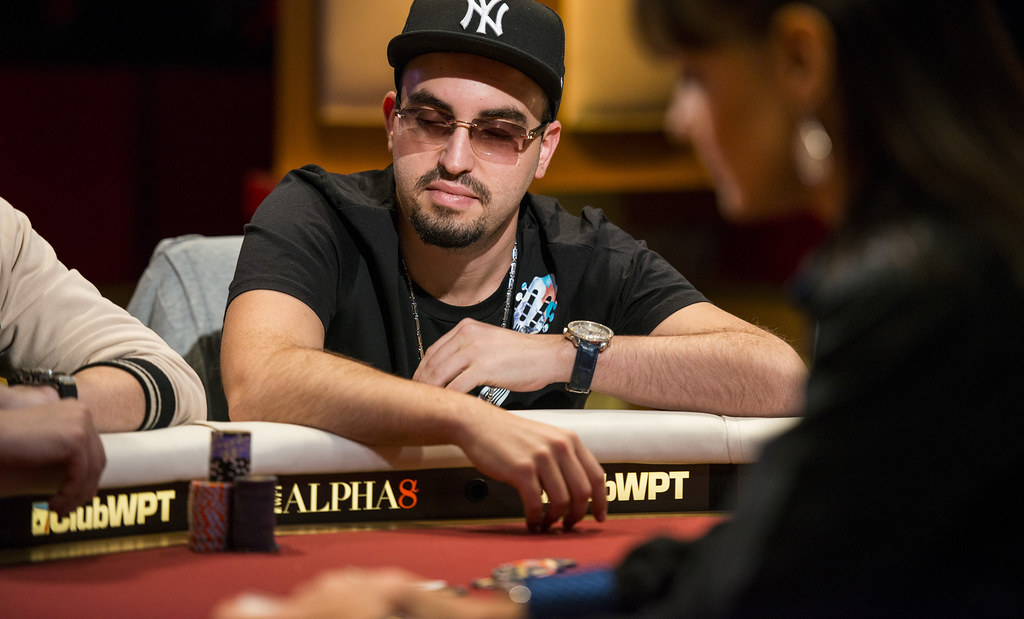
New York's Bryn Kenney boasts $90.8 million in recorded live tournament cashes, the most in poker history, roughly $11 million ahead of second-place Stephen Chidwick. His biggest single score was $20,563,324 at the 2019 Triton Million, A Helping Hand for Charity in London, where he finished runner-up to Aaron Zang after a heads-up deal. He stepped back from GGPoker's ambassador program around 2020 and subsequently launched 4poker, a platform targeting Latin American markets. GGPoker previously celebrated Kenney as the first player to surpass the $80 million career live earnings milestone during his time as the site's ambassador.
Kenney's name resurfaced in a separate controversy in April 2022 when poker player Martin Zamani appeared on the Doug Polk Podcast and accused Kenney of running a "cult-like" staking operation in which players he backed allegedly ghosted opponents and used real-time assistance software in online tournaments, primarily on GGPoker and partypoker. PokerNews reported at the time that Telegram screenshots appeared to show Kenney aware of, and at times directing, players to assist one another at final tables. Zamani also alleged that Kenney required staked players to follow his personal lifestyle rules, and described being taken by a shaman for a Kambo ceremony involving frog-derived poison, which he said he declined. Kenney denied the core cheating allegations, said the screenshots were not proof, and accused Zamani of attempting to blackmail him. No formal charges were ever filed.
GGPoker and NSUS Have Not Responded Publicly
As of the date of this article, neither GGPoker nor NSUS Group has issued a public statement addressing Kenney's allegations. Kim's only public response is through the court filing seeking dismissal of the fraud claim. GamblingNews noted that GGPoker has broadly maintained that fair play remains central to its business model but offered no specific reply to the suit.
Bryn Kenney Sues GGPoker FAQ
Why is Bryn Kenney suing GGPoker?
Bryn Kenney is suing GGPoker's parent company NSUS Group, its Irish affiliate NSUS Limited, and CEO Mansoo "Michael" Kim, alleging breach of contract and fraudulent inducement. He claims that in 2018 Kim promised him a 5% equity stake in GGPoker plus recurring commissions on players he recruited, and that the defendants never honored either commitment. He says commissions were systematically reduced through account reclassifications and unauthorized deductions, and that the equity stake was not recognized even when NSUS Group acquired the World Series of Poker for $500 million in 2024.
How much is Bryn Kenney claiming in the lawsuit?
Kenney is seeking compensatory and punitive damages described in the complaint as "tens of millions" of dollars. He has not stated a single specific figure, but the claim includes lost commission income, the value of the promised 5% equity stake, and punitive damages for the alleged fraud. He is also seeking a court-ordered accounting of corporate records to establish the full amounts owed.
Who are the defendants in Kenney's lawsuit?
The defendants named in Kenney's First Amended Complaint are NSUS Group Inc., GGPoker's Canadian parent company; NSUS Limited, its Irish affiliate; CEO Mansoo "Michael" Kim; and Global Gaming and Hospitality LLC, a Nevada company. Kim filed a motion to dismiss the fraud claim against him personally, arguing it rests on an unattributed, undated assurance.
What are the cheating allegations in the Bryn Kenney vs. GGPoker case?
Kenney alleges that Kim assured him GGPoker had strong anti-cheating protocols, but that systemic cheating was occurring on the platform and Kim failed to act on it. He also claims that when integrity issues became publicly visible, responsibility was shifted onto him and the player pools he oversaw. The complaint additionally alleges GGPoker targeted U.S. players, including Nevada residents, and allowed cryptocurrency access without a VPN in restricted markets.
When is the next court hearing in the Kenney vs. NSUS case?
A hearing on Mansoo Kim's motion to dismiss the fraud claim is scheduled for November 12, 2026, before U.S. District Judge Jennifer A. Dorsey in Las Vegas, Nevada. The case was originally filed in Clark County District Court in July 2026 and was moved to U.S. District Court in August 2026 by Kim. All claims remain unproven allegations at this stage.
What was Bryn Kenney's role at GGPoker?
From 2018 onward, Kenney served as a GGPoker brand ambassador, acting head of game management, and the site's primary recruiter of high-stakes players and agents. He says he brought thousands of players to the platform and helped build GGPoker's high-roller tournament schedule. He received around $5 million in commission income in 2019, his first full year under the arrangement, before the alleged cuts began. He left the ambassador program around 2020 and later founded 4poker, focused on Latin American markets.
- Article originally produced at poker.pro.
About the author

More Articles
GGPoker Launches Ocean KO: The Jackpot PKO Format That Changes Every Knockout
The Supreme Court Hearing That Could Reshape Online Poker in Canada on Oct. 7
UK Remote Gaming Duty Doubles April 1: No Immediate Changes for Online Poker Players
The 2026 UKPC Kicks Off Dusk Till Dawn’s Live Poker Season
Dara O’Kearney and David Lappin Cut Ties With WPT Global After Tony “Ren” Lin Signing

The 2026 WSOP Europe Chooses Hilton Prague as Its Venue
Twitch Poker Streaming Highlights – August 2025
Aussie Millions Returns in 2026 After Six-Year Hiatus