From losing his first $50 online to becoming a poker writer, author and PartyPoker Tour ambassador, Barry Carter has spent more than two decades thinking about the game. Ahead of the Tour’s arrival in Castellón, he talks satellites, live poker, mystery bounties, poker culture and why understanding luck might be one of the most important skills a player can learn.
Barry Carter’s introduction to online poker began with what looked like an extremely convincing sales pitch. Around 2004, while working what he describes as a boring office job, a friend invited him over and showed him PartyPoker. Carter watched him sit down in a $50 cash game and make $100.
“I was like, wow, that’s the easiest thing in the world”.
So, he downloaded the software, deposited $50 and promptly lost the lot.
What had been a hobby for his friend became an obsession for Carter, and the timing could hardly have been better. Poker was riding the wave of the post-Moneymaker boom, the online game was growing rapidly and an industry was forming around it.
Twenty years later, Carter has occupied almost every corner of that industry. He has played, written journalism and strategy content, co-authored poker books and built a reputation for translating complicated ideas into something recreational players can actually use. Today, he is also a PartyPoker Tour ambassador. Yet his career began almost accidentally.

From office job to poker writer
Like many people discovering the online world in the early 2000s, Carter started a blog. Someone from World Poker Tour Magazine came across his writing and asked to use one of his pieces. For Carter, the revelation was simple: somebody was willing to pay him for something he had already written. He responded by repeatedly pitching more.
Before long, he was producing a significant proportion of the magazine while still sitting at his desk in his day job. Eventually, the freelance poker writing was bringing in more money than the job itself.
“I really didn’t want to be in a call centre at Aviva anymore,” he says. Young enough to feel he had little to lose, he left and never looked back.
The industry he entered bears little resemblance to the one he works in today. Carter describes early poker as the “Wild West”. Strategy was far less developed, while much of the content surrounding it depended on enthusiasm rather than the ability to test claims rigorously. Now there are solvers, GTO theory and an enormous amount of data. Poker journalism has matured too, requiring a far greater understanding of regulation and the different markets in which the game operates.
“There’s no hiding there,” Carter says of modern strategy content. Ideas can be tested.
Paradoxically, the more sophisticated poker becomes, the more important he believes accessibility is. Carter describes his role in his books as being a stand-in for the reader. When working with experts including Dara O’Kearney and Jared Tendler, his task is to ask the questions the audience would ask and make the answers understandable. That philosophy may also explain the success of books aimed at simplifying modern poker theory. Carter notes that the word “simplified” has proved particularly powerful with readers, including experienced players who returned to poker after time away and suddenly found themselves confronted by solvers and a completely new strategic vocabulary.
Being the audience
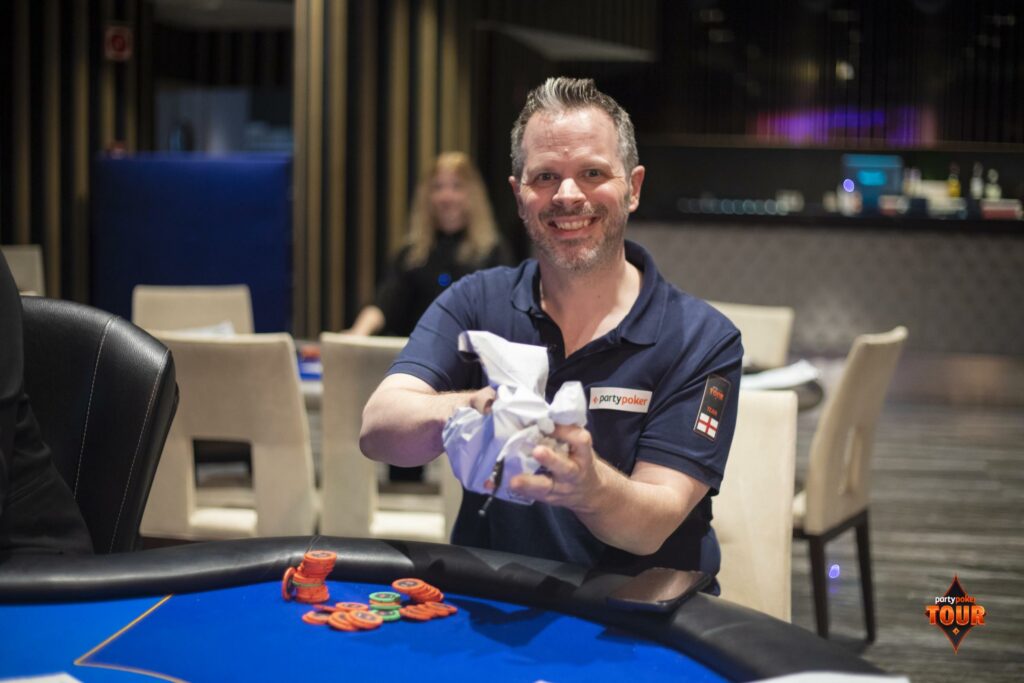
That idea of being a stand-in for the audience extends to Carter’s work as a PartyPoker Tour ambassador. The traditional image of a poker ambassador might be a famous professional who turns up, plays the tournament and represents the brand. Carter sees the modern role rather differently. A surprising amount of his time is spent answering questions. As someone closely associated with satellite strategy, he is regularly approached by players wanting to know what happens to a ticket, whether it can be used for another event, or simply what they are supposed to do after winning a package. For Carter, this is part of what the ambassador team is there for.
“We are the target audience,” he says.
Rather than existing at a distance from recreational players, ambassadors can act as a link between the tour and the people actually playing it.That relationship often begins before anybody arrives at the casino. PartyPoker satellites use real names, meaning familiar players start recognising one another online. By the time they meet at a live stop, a degree of rapport may already exist. It feeds into one of the qualities Carter values most about the tour: community.
What makes a live poker stop work?
Carter has a straightforward test for whether a live tournament is successful. He calls it the “Irish Open principle.” The Irish Open, he argues, has become a European bucket-list event partly because it is still enjoyable after you bust. A live poker trip can quickly become a disappointing and expensive experience if a player qualifies through a satellite, travels to the event, busts the Main Event and then discovers that every remaining tournament is beyond their bankroll. A strong festival gives them reasons to stay. It offers affordable side events, things to do away from the tables and enough atmosphere to make the trip feel worthwhile even after the poker has gone badly.
That might mean affordable side events, unusual formats, games away from the tables, somewhere worth exploring or simply a venue where players actually want to spend time together.
“It’s just a fun place to be, even if you don’t cash,” is Carter’s summary of the goal.
He believes the PartyPoker Tour has developed particularly strong repeat attendance for precisely that reason. Once players have experienced one stop, they start recognising the same faces at the next. Poker stops become reunions.
Why satellites still matter
If there is one area where Carter thinks the wider industry has lost sight of something important, it is satellites. Poker history itself provides the most famous argument for them. Chris Moneymaker’s 2003 World Series of Poker Main Event victory began with a satellite and helped ignite the poker boom that followed. Those routes into major tournaments once produced what Carter calls “Cinderella stories”, giving players a chance to move from a relatively modest investment to an experience that might otherwise have been outside their bankroll. He believes parts of the industry subsequently forgot how powerful that can be. PartyPoker’s approach is flexible, with satellites not only for Main Events but for side events too. Carter argues that this matters because qualifying for the headline tournament should not leave a recreational player unable to participate in anything else. He would like to see more operators either offer separate side-event satellites or include a side-event ticket as part of a Main Event package. For players, flexibility also matters. A satellite ticket won early in the year can potentially be used much later, allowing players to plan a live stop around their own schedule rather than being forced immediately into one specific event. For Carter, satellites remain one of poker’s most effective ways of opening the door.
Next stop: Castellón
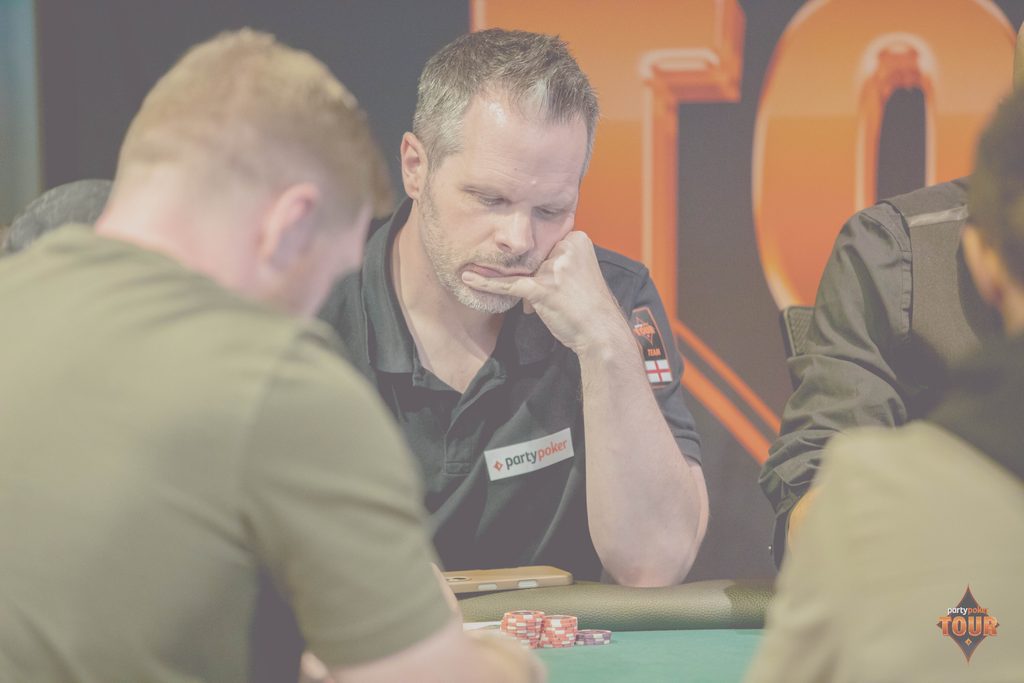
That door will shortly open onto Spain again as the PartyPoker Tour heads to Orenes Gran Casino de Castellón from 5 to 11 October. The schedule includes a €150 Mini Main, €500 Main Event, €250 Mystery Bounty and €1,000 High Roller. Carter already has fond memories of the Tour’s Spanish stops, particularly Seville, where the welcome from local players made a strong impression on him. For Castellón, he is hoping for something similar. He has been told to expect a quieter coastal destination close to Valencia, with the prospect of good weather even as autumn begins to take hold elsewhere in Europe. More importantly, he expects the scale of the destination itself to help create the kind of communal atmosphere he enjoys on tour.
“There’s just something so communal about these smaller towns that PartyPoker takes over,” he says.
His advice to travelling players is equally straightforward: come, and you are likely to leave knowing people you will see again at future stops.
As for his own prospects at the tables, Carter is cautiously optimistic. He has found the Spanish fields somewhat softer than their British counterparts and admits that Spain is where he tends to save his High Roller satellite tickets. Not that he intends to make predictions. High expectations, low expectations, it makes little difference. As Carter puts it, “the poker gods always have something else in mind.”
Do different countries play different poker?
After years of travelling, Carter has also become fascinated by the way poker culture changes from place to place. He rejects the idea that the game has become completely homogenised. Ireland, for example, offers a noticeably different experience from Britain. Carter believes Irish players are generally more comfortable with variance and less inclined to become upset by bad beats, creating a more relaxed atmosphere at the tables. He has also become interested in an observation made by his co-author Dara O’Kearney: local playing styles can sometimes appear to reflect the economic character of a place. Carter sees his home city of Sheffield as comparatively tight, while more prosperous locations can produce noticeably more aggressive games. Madrid, in his experience, featured stronger and more aggressive play than Seville. It is hardly a scientific formula, but once the idea was pointed out to him, he says he found it difficult to stop noticing it.
The Mystery Bounty mistake
Castellón also gives Carter a chance to play a format he knows well. He and O’Kearney have written on Mystery Bounty strategy, and Carter sees two common recreational mistakes.
The first is loosening up too early, before the bounty phase has even begun. The second comes when a major bounty is pulled early and players become too conservative, as though the tournament has suddenly lost its value.
For Carter, both mistakes come from reacting emotionally rather than understanding what the tournament requires at that moment.
Poker as problem solving
That mindset helps explain why Carter is still fascinated by poker after two decades: he likes problems.
At one recent hyper-turbo event, while others complained about the unusually large blinds, Carter and Ollie Hutchins simply treated the structure as another puzzle to solve.
The instinct extends beyond poker. Carter once asked players to calculate the expected value of not paying for parking, balancing repeated savings against the eventual risk of a fine. Hundreds joined in.
He has an obvious affection for poker’s nerdier side: people solving strange problems simply because the problems are there.
“There’s always something strange to try and solve,” he says.
Learning to live with luck
The harder question is what happens when a problem cannot be solved.
Carter is now working on his first solo poker book, focused on variance and luck rather than a specific format. He wants to explore how players understand randomness itself.
Poker, he says, has taught him not to overreact to bad luck or feel too guilty about good fortune. Sometimes the decision is right and the outcome is wrong.
That, for Carter, is one of poker’s most underrated skills.
Physical tells get his vote for the most overrated. His quick-fire choices reveal the same practical streak: online over live, gut instinct over GTO if that instinct is well trained, Main Event over Mystery Bounty and satellites emphatically over direct buy-ins.
His least favourite poker cliché is returning from the bathroom to be told, “You had aces.” Twenty years have not made it any funnier.
And the correct poker snack? Cashews. Nothing messy enough to damage the cards.
Perhaps that is a fitting summary of Carter’s poker philosophy: understand the variance, keep solving the problems, qualify through a satellite if you can, and keep the soup away from the table.